
The home that once felt perfectly comfortable can gradually become a landscape of challenges as mobility needs evolve. For seniors and people with reduced mobility, everyday tasks like navigating doorways, preparing meals, or simply moving from room to room can transform from routine activities into exhausting obstacles. Creating an accessible living space isn’t merely about compliance or convenience—it’s about preserving independence, dignity, and safety in the place where you should feel most secure.
Accessible design represents a fundamental shift in how we think about our living environments. Rather than reactive modifications made after an accident or mobility crisis, thoughtful accessibility planning anticipates future needs while enhancing current functionality. This comprehensive approach examines every aspect of the home—from strategic decision-making about renovation versus relocation to the precise biomechanics of how we interact with floors, doorways, and kitchen spaces. Understanding these principles empowers you to make informed choices that balance safety, aesthetics, and long-term value.
The statistics surrounding home-related injuries for older adults reveal a sobering reality. Falls represent one of the leading causes of injury-related hospitalizations, with the majority occurring in familiar home environments. What makes this particularly challenging is that many hazards remain invisible until mobility changes—a threshold that never posed problems suddenly becomes a tripping risk, or a kitchen layout that worked for decades becomes unreachable and unsafe.
Accessible living spaces address both immediate safety concerns and anticipate future needs. Think of it as preventive medicine for your home. A person in their sixties who enjoys full mobility might question the need for accessibility modifications, yet research consistently demonstrates that proactive adaptations cost significantly less than emergency renovations following an injury. Beyond the financial calculation lies something more valuable: the ability to age in place with confidence, maintaining the familiar routines and independence that contribute to overall well-being.
The concept of the “fall zone” illustrates this principle perfectly. This term describes any area in the home where balance, vision, lighting, or flooring conditions create elevated risk. Bathrooms, kitchens, and stairways typically qualify as fall zones, but so do seemingly benign areas like carpeted hallways with inadequate lighting or thresholds between rooms. Recognizing these zones represents the first step toward creating a truly accessible environment.
Before any physical modifications begin, a comprehensive home safety audit provides the essential roadmap. This systematic evaluation examines each room through the lens of accessibility, identifying both current barriers and potential future challenges. The methodology involves more than a simple walkthrough—it requires understanding how different mobility aids interact with your space, how lighting affects depth perception, and how reaching, bending, and balancing impact daily activities.
One of the most significant strategic decisions homeowners face is whether to renovate their current home or relocate to a more accessible property. This choice involves careful financial analysis comparing adaptation costs against moving expenses, property values, and long-term housing needs. A single-story home with wide doorways might require minimal modification, making renovation the clear choice. Conversely, a multi-level home with narrow hallways and steep stairs could demand such extensive structural changes that relocation becomes more practical and economical.
The question of when to implement accessibility modifications carries significant weight. Many people delay necessary adaptations, operating under the assumption that they’ll “wait until they need them.” This approach introduces unnecessary risk. Timing renovations before mobility loss occurs allows for more thoughtful planning, better budgeting, and the opportunity to incorporate modifications into broader home improvement projects, often reducing overall costs.
Effective accessibility planning looks beyond current requirements. A walker user today might need wheelchair accommodation in the future. Someone currently managing stairs comfortably should still consider how vertical access might become challenging. This forward-thinking approach doesn’t mean implementing every possible modification immediately—it means ensuring that structural decisions made now don’t prevent adaptations later. For instance, reinforcing bathroom walls during a remodel creates future grab bar installation options without requiring invasive work later.
The kitchen presents unique accessibility challenges because it combines mobility requirements with safety concerns involving heat, sharp objects, and the need to reach, carry, and manipulate items. Ergonomic reconfiguration transforms this high-risk area into a space that supports both safety and independence.
The traditional “work triangle” connecting the sink, stove, and refrigerator was designed for standing users with full mobility. Accessible kitchen design maintains efficiency while accommodating wheelchairs, walkers, or users who tire easily. This involves optimizing clearances, adjusting counter heights, and reorganizing storage to minimize dangerous reaching and bending.
Deep storage and high cabinets create significant hazards. Reaching into deep lower cabinets encourages risky bending and straining, while accessing high storage often involves unstable stretching or, worse, standing on chairs. The choice between pull-down shelving systems and lowering cabinets depends on specific needs and budget. Pull-down mechanisms bring upper cabinet contents to counter level, maintaining full storage capacity while eliminating dangerous reaching. Alternatively, lowering cabinet installations or reorganizing storage to keep frequently used items within the comfortable reach zone (between hip and shoulder height) provides simpler, more economical solutions.
The danger of high heat transfer represents a critical but often overlooked accessibility concern. Users with reduced sensation, slower reaction times, or impaired coordination face elevated burn risks. Accessible kitchen design addresses this through strategic appliance selection, careful burner placement, and thoughtful organization that minimizes the need to reach across or carry hot items over long distances. Front-mounted controls on cooktops, for example, eliminate the need to reach over burners.
Proper lighting upgrades transform kitchen safety. Task lighting under cabinets illuminates work surfaces, reducing knife accidents and improving accuracy. Ambient lighting eliminates shadows that obscure depth perception, making it easier to navigate and identify hazards. The process for effective lighting upgrades considers both light quality and placement, ensuring even distribution without glare that can impair vision for users with age-related eye conditions.
Doorways often represent the most significant architectural barriers in homes not originally designed for accessibility. Standard residential doors typically provide 30 to 32 inches of passage width—adequate for ambulatory users but insufficient for wheelchairs and many walkers. Understanding the clear width requirement of at least 32 inches of usable passage (and ideally 36 inches) forms the foundation of doorway accessibility.
Creating adequate passage width without major structural modifications often involves several strategies. Installing offset hinges moves the door beyond the frame when opened, adding approximately two inches of clear width—sometimes just enough to meet accessibility standards. This relatively simple modification can make the difference between independence and dependence on assistance.
The debate between pocket doors and swing doors illustrates the nuanced decisions in accessibility planning. Pocket doors slide into the wall cavity, eliminating the space required for door swing and maximizing room usability. They work exceptionally well in tight spaces like bathrooms. However, they require adequate wall cavity depth and can involve electrical rerouting if switches or outlets occupy the pocket space. Swing doors remain simpler and more cost-effective when sufficient clearance exists, but they consume floor space and can create collision hazards.
Accommodating wheelchairs and walkers sometimes requires widening doorway openings—a more invasive structural modification. This process involves removing existing door frames, potentially relocating studs, and installing wider frames and doors. While more expensive than offset hinges, this approach provides the most robust long-term solution for homes where multiple doorways present barriers. Optimizing trim for durability during these modifications ensures that wheelchair footrests and walker frames don’t damage new installations.
The biomechanics of tripping reveal why floor-level obstacles pose such significant danger. As we age or experience mobility challenges, gait patterns change—we lift our feet less, shuffle more, and have slower reaction times when balance is threatened. Even minor elevation changes of half an inch can catch toes or walker wheels, triggering falls.
Removing floor-level obstacles for seamless navigation represents one of the most effective fall-prevention strategies. This includes addressing thresholds between rooms, flooring transitions between different materials, and any vertical changes in floor height. The goal is creating continuous, barrier-free surfaces throughout living areas.
Thresholds serve functional purposes—they prevent water migration from bathrooms, separate different flooring materials, and cover expansion gaps. However, they create accessibility barriers. Installing rubber threshold ramps provides a practical compromise, creating a gentle slope over unavoidable thresholds. These ramps accommodate wheelchairs and walkers while remaining stable and slip-resistant.
The transition between hardwood and carpet presents particular challenges. Beyond the physical elevation difference, the risk of visual continuity comes into play. When flooring materials are similar in color, the transition becomes difficult to see, especially for users with reduced vision or depth perception. Accessible design addresses this through either eliminating transitions where possible or creating clear visual contrast that makes elevation changes obvious. Properly installed transition strips that taper gradually rather than creating abrupt edges further reduce tripping risk.
Optimizing furniture layout for flow extends floor-level safety beyond architectural features. Mobility aids require wider clearances than most people realize—a minimum of 36 inches for comfortable walker passage and 60 inches for wheelchair turning radius. Arranging furniture to create clear pathways, removing unnecessary pieces that clutter navigation routes, and securing area rugs (or preferably eliminating them) all contribute to safer, more accessible spaces.
The error of DIY modifications in accessibility projects cannot be overstated. While many home improvement tasks suit enthusiastic amateurs, accessibility adaptations involve precise measurements, code requirements, and safety considerations where mistakes carry serious consequences. An improperly installed grab bar that pulls from the wall during a fall, or a ramp with inadequate slope calculations, can create more danger than the original hazard.
The process for hiring certified contractors specializing in accessibility modifications begins with verification of proper credentials. Look for professionals with specific training in universal design, ADA compliance, or aging-in-place modifications. Certified Aging-in-Place Specialists (CAPS) or similar credentials demonstrate commitment to understanding the unique requirements of accessible living spaces. Request references from previous clients with similar projects, and verify that contractors carry appropriate liability insurance and understand relevant building codes.
For homes where vertical access presents challenges, understanding the comparison between ramps versus vertical lifts helps guide decisions. Ramps require significant space—a safe slope ratio of 1:12 means each inch of rise demands twelve inches of ramp length. A standard 24-inch rise requires a 24-foot ramp, plus landing areas. This makes ramps ideal for entrances with minimal elevation change but impractical for full-story transitions. Vertical platform lifts or stairlifts provide alternatives where space constraints exist, though they involve higher costs and maintenance requirements. The choice between these solutions depends on available space, budget, aesthetic preferences, and specific mobility challenges.
Creating accessible living spaces represents an investment in long-term independence and safety. By approaching modifications strategically—prioritizing based on comprehensive assessment, anticipating future needs, and working with qualified professionals—you transform your home into an environment that supports rather than challenges your mobility. Whether addressing doorway clearances, kitchen ergonomics, or floor-level hazards, each thoughtful adaptation contributes to a space where you can live confidently and independently for years to come.
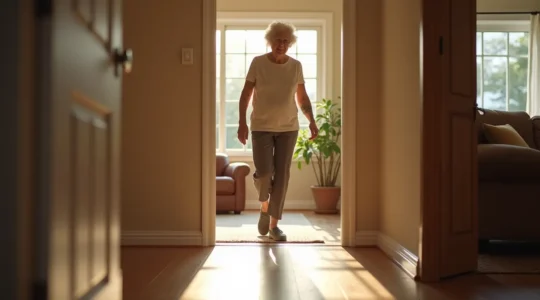
In summary: Even a 1/4-inch threshold is a significant fall risk for those with a shuffling gait or who use mobility aids. Replacing raised transitions with zero-profile strips or beveled rubber ramps creates a seamless, trip-free surface. High-contrast flooring between…
Read more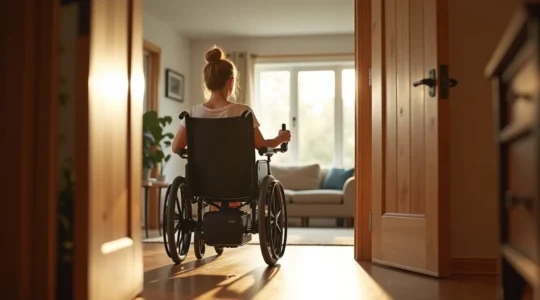
In summary: Standard 30-inch doors are often too narrow for modern electric wheelchairs, requiring modifications for safe passage. Non-structural solutions like offset hinges can add up to 2 inches of clear width for minimal cost and effort. More significant modifications…
Read more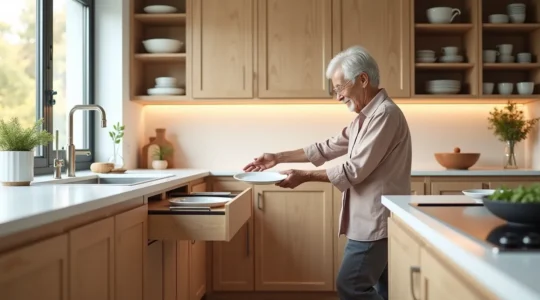
In summary: Transform your kitchen from an obstacle course into an ergonomic workspace by designing strategic “action zones.” Prioritize dynamic storage solutions like pull-down shelves and rolling carts that bring items to you, eliminating reaching and bending. Optimize your kitchen’s…
Read more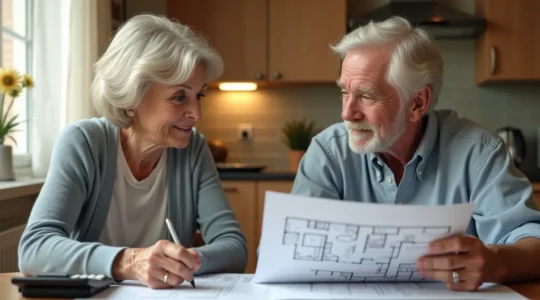
Prioritizing home safety on a fixed pension isn’t about buying the most expensive equipment; it’s about a strategic, phased approach that maximizes safety for every dollar spent. Focus first on “critical safety” zones like the bathroom, where a high number…
Read more
The decision to renovate your home or relocate for your senior years is not just emotional; it’s a critical financial calculation of your property’s long-term viability. Renovation costs must be weighed against their ability to prevent a single, catastrophic event…
Read more