
Care and assistance represents far more than occasional help with daily tasks. For seniors and individuals with reduced mobility, it encompasses a comprehensive ecosystem of support that directly impacts health outcomes, cognitive function, emotional wellbeing, and the ability to age safely at home. As physical capabilities change and medical needs become more complex, the quality and coordination of care determines whether independence remains achievable or declines prematurely.
This interconnected network of support spans six critical pillars: nutritional management that addresses both chronic disease and changing palates, medication safety systems that prevent dangerous errors, dignified personal care that preserves autonomy, environmental optimization for cognitive health, professional caregiver relationships built on trust, and emotional companionship that combats the silent threat of isolation. Understanding how these elements work together empowers families to build sustainable care plans that honor dignity while protecting health.
Proper nutrition forms the foundation of effective senior care, yet it represents one of the most commonly overlooked aspects. The challenge extends beyond simply providing food—it requires understanding how aging bodies process nutrients differently, how chronic conditions demand specific dietary modifications, and how diminished senses affect appetite and enjoyment.
Managing conditions like diabetes, heart disease, and hypertension through food requires precision and consistency. For instance, someone with congestive heart failure may need sodium restricted to under 2,000 mg daily, while a diabetic requires careful carbohydrate distribution across meals to maintain stable blood sugar. The hidden danger lies in “healthy” processed foods marketed to seniors that contain surprisingly high sugar or sodium levels. Reading labels becomes a critical skill—a single serving of certain whole grain breads or low-fat yogurts can contain as much added sugar as dessert.
Creating a weekly heart-healthy menu involves balancing omega-3 rich fish, colorful vegetables high in antioxidants, and whole grains while carefully limiting saturated fats. Think of it like building a protective shield: each meal either reinforces cardiovascular health or chips away at it. The cumulative effect of consistent dietary choices often proves more powerful than medication alone.
The debate between meal delivery services and home cooking isn’t binary—the optimal solution often combines both approaches. Home cooking allows complete control over ingredients and modifications for texture or flavor preferences, while quality meal delivery services provide backup during challenging weeks or when caregiver fatigue sets in.
However, texture modification—pureeing or mincing foods for those with swallowing difficulties—carries significant risks when done incorrectly. Aspiration pneumonia remains a leading cause of hospitalization among seniors, often resulting from inconsistent food textures. Professional assessment by a speech therapist should always precede texture modifications. Similarly, optimizing fiber intake requires a delicate balance: too little causes constipation and digestive discomfort, while too much introduced too quickly creates bloating and nutrient absorption issues.
Enhancing flavor for aging palates demands creativity. As taste buds diminish, using fresh herbs, aromatic spices, citrus zest, and umami-rich ingredients like mushrooms or aged cheeses makes meals appealing without relying on excess salt. The goal is maintaining joy in eating, not just meeting nutritional requirements.
The complexity of managing multiple prescriptions represents one of the most dangerous aspects of senior care. When someone takes five or more medications—a situation called polypharmacy—the risk of harmful interactions, side effects, and dosing errors multiplies exponentially. Unlike younger adults who might take occasional medications, seniors often navigate intricate schedules where timing, food interactions, and sequence matter critically.
Creating a fail-safe system begins with choosing the right organizational tool. The choice between blister packs and pill organizers depends on cognitive ability and dexterity. Blister packs, often prepared by pharmacies, reduce decision-making but require sufficient hand strength to press pills through foil. Weekly pill organizers with multiple daily compartments work well for those who can reliably follow schedules but struggle remembering whether they’ve taken doses.
Advanced solutions include automatic dispensers that audibly alert at dosing times and dispense only the correct pills. These prove invaluable for individuals living alone or those with early cognitive changes. Regardless of the method chosen, maintaining a detailed medication log book creates accountability and helps identify patterns if side effects emerge. This log should record not just what was taken and when, but also any symptoms, skipped doses, or changes in routine.
The consequence of polypharmacy interactions can range from reduced medication effectiveness to life-threatening complications. A common example: certain blood pressure medications interact with grapefruit juice, dramatically increasing drug levels in the bloodstream. Another: taking aspirin alongside blood thinners without medical supervision compounds bleeding risk.
Perhaps equally dangerous is stopping medications abruptly without medical guidance. Beta-blockers for heart conditions, for instance, can cause rebound hypertension and cardiac events if discontinued suddenly. This is why third-party management through pharmacists or care coordinators adds a crucial safety layer—they track all medications across multiple prescribers, catch potential interactions before they occur, and ensure proper disposal of expired or discontinued drugs that could cause accidental overdose if confusion strikes.
Timing doses for lifestyle fit improves adherence significantly. Someone who struggles with morning routines might better manage evening doses, while medications causing drowsiness should align with bedtime rather than disrupting daily activities.
Managing hygiene needs represents perhaps the most emotionally sensitive aspect of care assistance. The loss of ability to bathe independently affects self-esteem profoundly, yet the health risks of poor hygiene—skin infections, urinary tract issues, and social withdrawal—make this support non-negotiable.
The decision between shower chairs and bath benches depends on mobility level and bathroom configuration. Shower chairs with backs provide more support for those with significant weakness, while transfer benches that span the tub edge assist those who cannot step over high ledges. Both prevent the falls that make bathrooms among the most dangerous rooms in a home.
Establishing a consistent routine for bed baths—when traditional bathing becomes impossible—maintains hygiene while providing structure. This isn’t simply wiping with a washcloth; proper bed bathing follows a systematic sequence: face, neck, arms, torso, legs, then perineal area last, using fresh cloths for each section to prevent cross-contamination. Water temperature requires careful attention, as seniors often have diminished temperature sensitivity and risk burns from water that feels only warm to them.
The risk of skin tears increases dramatically with age as skin becomes paper-thin and fragile. This demands gentle patting rather than rubbing, careful attention to avoiding friction during transfers, and keeping skin moisturized. But beyond physical technique, maintaining modesty preserves dignity. This means exposing only the area being washed at any moment, knocking before entering bathrooms, explaining each step before proceeding, and honoring preferences about same-gender caregivers when possible.
Think of hygiene assistance as a partnership rather than a task performed on someone. Involving the person in as many steps as they can manage—holding the washcloth, choosing the soap scent, directing the water temperature—maintains a sense of control in a vulnerable situation.
The environment surrounding a senior doesn’t simply house them—it actively shapes cognitive function, mood, and mental acuity. Recent research reveals that environmental and social scaffolding can significantly slow cognitive decline or, conversely, accelerate it when poorly designed.
Sensory deprivation acts like a slow dimmer switch on brain function. When days blur into monotonous sameness with minimal visual interest, unchanging sounds, and no meaningful smells, neural pathways atrophy from disuse. Conversely, strategic sensory enrichment keeps the mind engaged and processing.
Scent offers a particularly powerful memory stimulation tool because the olfactory system connects directly to memory centers in the brain. The smell of lavender might trigger memories of a grandmother’s garden, while fresh bread baking could recall family Sunday dinners. Introducing varied, meaningful scents throughout the day—fresh coffee in morning, citrus at midday, perhaps vanilla in evening—creates temporal markers that help orient confused minds while stimulating neural connections.
The balance between novelty and routine requires careful calibration. Too much routine creates understimulation, yet too much novelty generates anxiety and disorientation. The optimal approach introduces small, manageable changes within a familiar structure: the same breakfast routine but with different music, familiar walking routes but noticing seasonal changes, regular meal times but varying recipes.
Social withdrawal represents one of the most dangerous yet preventable threats to senior health. The data is stark: chronic loneliness carries health risks equivalent to smoking fifteen cigarettes daily. It elevates blood pressure, weakens immune function, and accelerates cognitive decline. Yet it often develops gradually and invisibly.
Optimizing environmental factors like lighting for circadian rhythm plays an unexpected role in social engagement. Bright, blue-spectrum light during morning hours helps maintain the body’s natural sleep-wake cycle, improving nighttime sleep quality and daytime alertness for social activities. Dimmer, warm-toned lighting in evenings signals the body to prepare for rest. When sleep patterns deteriorate, so does energy for maintaining relationships.
Environmental design should facilitate rather than hinder social connection: seating arrangements that allow easy conversation, accessible outdoor spaces for neighborhood interaction, and visibility to street activity that maintains connection to community life even when mobility limits direct participation.
Selecting the right caregiver ranks among the most consequential decisions in building a care and assistance plan. This relationship will involve intimate tasks, significant trust, and daily interaction—yet families often approach hiring with less structure than they’d use selecting an appliance.
The fundamental choice between agency-provided and privately hired caregivers involves trade-offs. Agencies handle screening, background checks, insurance, and provide substitutes when someone calls in sick—but cost more and offer less control over who arrives. Private hires allow you to select someone whose personality meshes well with your family and often cost less, but place all responsibility for vetting, taxes, and backup plans on you.
The interviewing process should probe beyond basic qualifications. Ask scenario-based questions: “How would you handle a situation where the person refuses their medication?” or “Describe your approach when someone becomes frustrated during hygiene assistance.” The answers reveal problem-solving abilities, respect for autonomy, and temperament under pressure. Equally important: observe how the candidate interacts directly with your family member. Do they speak to the senior or about them as if they weren’t present? Do they listen actively or seem rushed?
Caregiver burnout—whether professional or family—represents a system failure that endangers everyone. The stress reduction benefits of proper support systems cannot be overstated. Professional caregivers need reasonable hours, clear role boundaries, and organizational backup. Family caregivers require respite care, emotional support, and permission to acknowledge the difficulty without guilt.
Optimizing communication creates the foundation for sustainable care relationships. This means establishing preferred contact methods, creating shared care logs accessible to all team members, scheduling regular check-ins to address small concerns before they escalate, and fostering an environment where caregivers feel safe reporting problems. When a caregiver mentions that medication management seems increasingly difficult for the care recipient, that’s valuable intelligence for adjusting the support plan—but only if the communication culture welcomes such observations.
Holistic support systems for aging in place recognize that professional care supplements rather than replaces family involvement. The goal is partnership where each party contributes what they’re best positioned to provide: professionals bring expertise and physical stamina, families bring intimate knowledge and emotional connection.
The link between conversation and health outcomes surprises many people, yet research consistently demonstrates that regular, meaningful social interaction reduces mortality risk, slows cognitive decline, and improves outcomes from major illnesses. Emotional companionship isn’t a luxury added to care plans when budget allows—it’s a core component that influences whether other interventions succeed.
Techniques for effective engagement differ dramatically from simply “keeping someone company.” Meaningful connection involves asking open-ended questions that invite storytelling, actively listening without rushing to fill silences, engaging in shared activities that provide conversation structure (folding laundry together, looking through photo albums, simple cooking tasks), and validating emotions rather than dismissing concerns.
The choice between paid companions and volunteers depends on needs and resources. Paid companions provide reliable, scheduled interaction and often bring training in engaging those with cognitive changes. Volunteers through senior centers or faith communities offer authentic relationship but less reliability and typically shorter visits. Many successful plans combine both: paid companions for consistent core support, volunteers for variety and community connection.
However, awareness of emotional dependency risks remains important. When a senior’s entire social world revolves around one or two paid caregivers, what happens during that person’s vacation or if they leave? Building a diverse social network—including accessible outings to senior centers, places of worship, or community events—creates resilience and reduces unhealthy dependence on any single relationship.
Planning these accessible outings requires attention to physical accessibility, energy levels, and interest alignment. A two-hour museum visit might overwhelm someone who fatigues quickly, while a 30-minute trip to a farmers market provides manageable stimulation. The measure of success isn’t activity quantity but whether outings enhance mood, provide cognitive engagement, and foster connection to the broader world.
Ultimately, comprehensive care and assistance recognizes that quality of life encompasses far more than physical safety and medical management. The most effective support plans address the whole person—nourishing the body through thoughtful nutrition, protecting health through meticulous medication safety, preserving dignity during personal care, stimulating the mind through environmental design, providing professional expertise through skilled caregivers, and nurturing the spirit through genuine companionship. When these elements work in harmony, aging in place becomes not just possible but fulfilling.

Medication safety is not about remembering pills; it’s about building a verifiable, protocol-driven system that makes errors nearly impossible. Errors like double-dosing are system failures, not memory failures, often caused by poor communication and a lack of verification. A dynamic…
Read more
Many families notice their aging parents are lonely, even with practical help at home. The solution isn’t more task-based support, but a shift towards relational care. This guide reframes the caregiver’s role from a simple helper to a ‘social scaffold’—a…
Read more
Effective senior meal planning replaces rigid menus with a flexible “food system” that empowers caregivers to assemble delicious, nutrient-dense meals in minutes. Focus on prepping individual components (proteins, grains, veggies) instead of full meals for maximum versatility. Prioritize nutrient fortification…
Read more
Maintaining dignity during assisted bathing isn’t about giving up control, but actively managing it through respectful techniques and a shift in mindset. Prioritizing skin health is non-negotiable, as seemingly minor lapses in hygiene can lead to serious, hard-to-heal infections. Specific…
Read more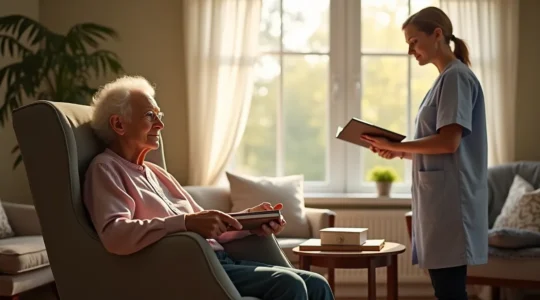
Welcoming a caregiver isn’t about giving up control; it’s about upgrading your support system to keep you in charge. Reframe the role from “caregiver” to “personal assistant” to focus on delegation, not dependency. Establish a “Care Council” where you, the…
Read more
The fear of medication error with a complex regimen is valid, but it can be eliminated by replacing simple reminders with a rigorous, multi-layered safety protocol. A single, master medication list (a “Single Source of Truth”) is non-negotiable and must…
Read more
Designing a living room for a senior is not about passive decoration; it’s an active therapeutic process. By treating the space as a form of ‘environmental scaffolding,’ we can go beyond basic safety to create a cognitive support system. This…
Read more
In summary: Building flavor without salt relies on a strategy of layering tastes and textures, not just simple substitution. “Component prepping” ingredients separately allows for creating varied, fresh-tasting meals throughout the week. Understanding nutrition labels beyond just sodium is key…
Read more