
Daily life at home should feel safe, comfortable, and empowering—not stressful or physically taxing. Yet for seniors and individuals with reduced mobility, even routine activities like getting out of bed, remembering where keys are placed, or walking across a room can present unexpected challenges. These difficulties often arise not from inability, but from environmental barriers, sedentary patterns, and the absence of simple supportive systems.
Home and daily living encompasses everything from morning routines and furniture choices to fall prevention and memory support. By understanding how small adjustments in movement, environment, and organization work together, you can create a living space that actively supports physical ease, mental clarity, and genuine independence. This article introduces the core pillars of safer, more comfortable daily living, offering practical insights into mobility, home safety, cognitive aids, and the behavioral strategies that make lasting improvement possible.
One of the most overlooked contributors to physical discomfort and stiffness is prolonged inactivity. When the body remains sedentary for extended periods, muscles tighten, joints stiffen, and chronic pain can intensify. This cycle is particularly common among those with limited mobility, yet it’s also highly reversible with intentional, gentle movement.
Sedentary habits don’t just affect muscles—they impact circulation, joint lubrication, and even mental well-being. Research consistently shows that even brief episodes of movement throughout the day can reduce stiffness and improve range of motion. The key is consistency, not intensity. Simple actions like standing to look out a window, rotating ankles while seated, or reaching overhead can prevent the gradual decline associated with immobility.
Think of muscles like sponges: they need regular compression and release to stay hydrated and functional. Without movement, they become dry and rigid. Micro-movements—small, frequent adjustments in posture or position—act as this gentle squeeze, maintaining tissue health without demanding strenuous effort.
Starting the day with a structured mobility flow sets a positive tone for physical comfort. A morning routine doesn’t require complex exercises; rather, it should follow a logical sequence that wakes up the body progressively:
This gradual progression respects the body’s need to warm up slowly, especially after hours of overnight rest. Consistency matters more than duration—even five minutes daily yields better results than sporadic longer sessions.
Your living space should work with your body, not against it. Thoughtful modifications to furniture and bedroom setup can dramatically reduce physical strain and improve restorative rest.
The choice between electric risers and manual adjustments often comes down to individual needs and budget. Electric lift chairs and adjustable beds offer effortless positioning with the press of a button, ideal for those with severe arthritis or limited upper body strength. Manual mechanisms, while requiring more physical effort, provide reliable functionality without electrical dependencies or higher costs.
Consider your specific challenges: Do you struggle most with standing from seated positions? An electric riser might be transformative. Is finding a comfortable sleeping angle difficult? Adjustable bed frames allow precise elevation of head or legs to reduce pressure points and improve breathing.
Quality sleep directly impacts pain levels, cognitive function, and overall well-being. Yet the bedroom environment often receives less attention than it deserves. Key factors include:
Think of the bedroom as a recovery zone. Just as athletes optimize their sleep environment for performance, creating conditions that support restorative rest becomes increasingly important when managing chronic conditions or mobility limitations.
Forgetfulness isn’t always a sign of cognitive decline—stress, medication side effects, and simple distraction contribute significantly to everyday memory lapses. The solution lies not in forcing better memory, but in creating external systems that reduce reliance on recall.
The debate between voice assistants and written notes isn’t about which is objectively better, but which matches your habits and comfort level. Voice-activated devices excel at reminders, timers, and hands-free information retrieval. They’re particularly valuable when mobility makes writing difficult or when you need prompts while engaged in other activities.
Written notes and visual systems, however, provide constant, passive reminders without requiring interaction. A whiteboard by the door listing items to take, or a labeled drawer system, works automatically every time you glance at it. Many find success combining both: voice assistants for time-based reminders, written systems for spatial organization.
Systematizing object placement transforms forgetfulness from a daily frustration into a non-issue. The principle is simple: every item has one designated home, and that location is chosen for logical, functional reasons—not random convenience.
Association techniques strengthen this system. For example, place medication bottles next to items used at specific times (morning coffee, toothbrush for evening doses). Link keys to departure points. Position frequently needed items within easy reach of where they’re used, eliminating both memory burden and physical strain.
A common error that undermines these systems is multitasking. When attention splits between several activities, objects get set down absently in illogical locations. Intentional, single-focus action—even for just a few seconds—ensures items return to their designated spots.
Non-adherence to medication schedules and beneficial routines isn’t typically about carelessness or lack of motivation. Understanding the psychological and practical barriers reveals more effective solutions than simply “trying harder.”
The psychology of non-adherence often involves decision fatigue, disrupted cues, or unclear consequence perception. When routines rely purely on memory and willpower, they compete with dozens of other daily decisions. Disruptions to normal schedules—appointments, visitors, travel—break the automatic cue-behavior chain.
Additionally, the risk of double dosing creates anxiety that paradoxically leads to missed doses. Without clear confirmation systems, uncertainty about whether medication was already taken leads to conservative inaction rather than potential overdose.
Effective adherence systems remove the memory burden entirely. Options include:
The choice between apps and alarms depends on technological comfort. Apps offer detailed tracking and pattern analysis, beneficial when managing multiple medications with complex schedules. Simple timers and alarms work well for straightforward regimens and don’t require smartphone proficiency.
Managing changes in routine requires planning ahead: when travel or schedule disruptions are anticipated, set temporary alarms at new times or prepare written checklists that account for the altered day structure.
Falls represent one of the most serious threats to independence, with hip fractures often marking a turning point in mobility and quality of life. Yet most falls are preventable through systematic attention to home environment, footwear, and movement techniques.
Floor safety begins with understanding friction physics. Non-slip surfaces only remain effective when properly maintained—residue from cleaning products or accumulated dust can create treacherous layers atop textured flooring. Regular cleaning with appropriate products preserves grip without leaving slick films.
Area rugs present particular hazards. The danger of curling edges is well-documented, but the choice between double-sided tape and underlays matters significantly. Tape provides strong initial hold but degrades over time and can damage flooring. Purpose-designed underlays offer consistent grip on both sides—to floor and to rug—without adhesive deterioration.
The carpet runners versus bare wood debate involves tradeoffs: runners provide cushioning and traction but introduce edge hazards; bare wood offers uninterrupted surfaces but less forgiveness in falls and potentially less friction when wet.
Stairs concentrate fall risk due to height, repeated movements, and divided attention. Safety retrofitting for existing stairs should address multiple factors:
Technique for safe descending matters as much as infrastructure: face forward, use handrails with each step, avoid carrying objects that obstruct vision or balance, and never rush. The danger of carrying objects down stairs cannot be overstated—impaired vision and shifted center of gravity dramatically increase fall risk.
Adding secondary handrails on the open side of stairways provides crucial support and should be prioritized in any safety upgrade.
The impact of lighting on depth perception explains many falls that occur in familiar environments. Inadequate or harsh lighting flattens spatial cues, making it difficult to judge where one surface ends and another begins. This particularly affects stairs, transitions between flooring types, and raised thresholds.
Optimal lighting combines adequate brightness with minimal glare and shadows. Motion-activated lights for nighttime navigation eliminate the dangerous period between waking and finding light switches. Optimizing entryways for weather conditions means ensuring well-lit paths from car or street to door, regardless of seasonal darkness or precipitation.
What you wear on your feet profoundly affects balance, gait, and fall risk. Understanding the physics of traction and how footwear influences biomechanics enables better choices for different activities and environments.
The physics of traction involves friction between sole material and floor surface. Different outsole materials perform variably on dry floors, wet surfaces, carpet, and outdoor terrain. Generally, softer rubber compounds with textured patterns provide superior grip on hard, smooth surfaces, while more aggressive treads benefit outdoor use.
Selecting outsole material should match primary use environment. Vulcanized rubber excels on tile and hardwood. Polyurethane offers durability for outdoor mobility. Hybrid designs attempt to balance multiple surface types but may compromise peak performance in any single condition.
The grip socks versus shoes debate centers on indoor safety. Grip socks with rubberized treads provide traction superior to bare feet or regular socks while maintaining comfort and foot breathability. However, they lack the structural support and protection of shoes. For individuals with significant balance challenges or foot deformities, supportive indoor shoes with non-slip soles offer better stability.
Understanding the danger of shuffling is critical: this gait pattern—characterized by minimal foot clearance—increases trip risk on any irregular surface while indicating potential muscle weakness or neurological changes requiring attention. Proper footwear should encourage healthy heel-toe gait patterns through appropriate flexibility and support.
Optimizing wet surface confidence requires dedicated footwear. Bathroom floors, kitchens after spills, and entryways during rain demand maximum traction. Designated water-resistant shoes with drainage and aggressive tread patterns specifically for these high-risk zones add a crucial layer of protection.
Creating a home environment that truly supports daily living isn’t about making one dramatic change—it’s about systematically addressing mobility, safety, memory, and routine through small, evidence-based adjustments. Each modification, from morning movement sequences to strategic lighting, contributes to a foundation of confidence and capability. By understanding these interconnected elements, you can build a personalized approach that maintains the independence and comfort every person deserves in their own home.
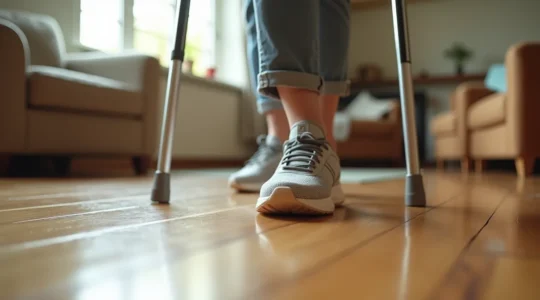
Contrary to popular belief, preventing falls at home isn’t just about buying “non-slip” slippers or avoiding socks. The key is understanding the biomechanics of your gait and the physics of friction at the surface interface between your foot and the…
Read more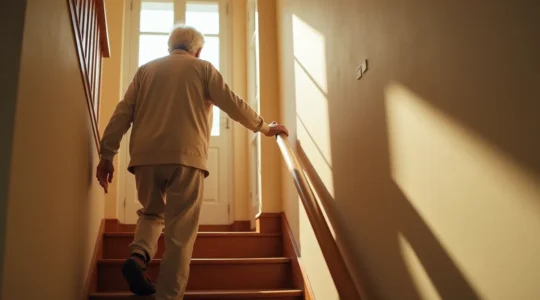
Generic advice fails to prevent stair-related falls; only a systematic audit of lighting, grip, and user habits can truly secure a staircase. Shadows and poor contrast are not just inconveniences; they are “visual traps” that actively trick the eye, increasing…
Read more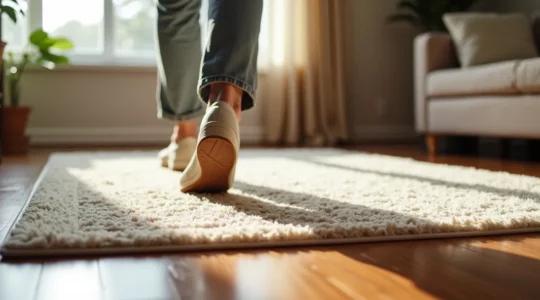
Securing an area rug is more than just stopping it from sliding. Most common advice fails because it ignores the crucial interaction between materials. True safety for seniors on hardwood or tile floors comes from understanding the material science of…
Read more
In summary: Medication non-adherence is often a habit-design problem, not a memory failure. Link medication to a solid daily ritual (like your morning coffee) to make it automatic. Use dynamic visual cues (e.g., a two-sided coaster) to avoid “cue blindness”…
Read more
In summary: Your mind, not just a pillbox, is your most powerful tool for medication adherence. Defeating memory blockers like stress and distraction is the first step to perfect recall. Techniques like “Pill Personas” and the “Memory Palace” transform your…
Read more
The key to managing joint pain after 60 isn’t just periodic exercise, but creating a gentle daily “wellness rhythm” that supports your body 24/7. Integrate small “movement snacks” and supportive ergonomics into your day to combat stiffness and inflammation. Optimize…
Read more