

Choosing a medical alert system is not about comparing features; it’s about auditing the entire emergency response ecosystem for points of failure.
- System reliability depends on a chain of factors: verified GPS accuracy, multi-network cellular coverage, and a clear protocol for first responder access.
- Regular, comprehensive testing of the complete system—from button press to dispatcher confirmation—is more critical than the device itself.
Recommendation: Prioritize systems with transparent testing policies and integrated solutions (like lockbox access and caregiver apps) over those with the longest feature list.
For active seniors, a sense of security shouldn’t end at the front door. The freedom to garden, take a walk, or visit friends is precious, but it also introduces a variable that many standard safety systems ignore: the world outside. The common advice is to “get a system with GPS” or “make sure it has fall detection.” While correct, this view is dangerously incomplete. It treats a life-saving service like a consumer gadget, focusing on a checklist of features rather than its single most important function: performing flawlessly in a crisis.
A medical alert device is not just a button. It is the first link in a complex emergency response ecosystem. The true measure of its worth isn’t found in its battery life or its color options, but in the structural integrity of this entire chain. What good is a GPS tracker if it can’t get a signal in a favorite park? What is the value of fall detection if it triggers constant false alarms, leading the user to stop wearing it?
This guide moves beyond the feature list. We will deconstruct this ecosystem piece by piece, from the initial trigger to the moment help arrives. By analyzing each potential point of failure, you will learn how to ask providers the right questions and, more importantly, how to choose a system based on rigorous evaluation, not just marketing promises. It’s about selecting a truly reliable safety net, not just a device.
To help you make an informed and rigorous decision, this article breaks down the critical components of a modern medical alert ecosystem. We will examine the technology, the protocols, and the practical considerations that separate a simple gadget from a dependable lifeline.
Summary: How to Choose a Medical Alert System That Works Outside the Home?
- Why Every Second Counts After a Fall or Stroke?
- How to Perform a Monthly Test Call Without Annoying the Operator?
- Traditional Landline or Cellular GPS: Which Is Safer for Active Seniors?
- The “Shower Trigger” Problem and How to Prevent It
- How to Install a Key Lockbox So Paramedics Don’t Break Your Door?
- How to Use a Communication Log to Keep Family and Caregivers Aligned?
- Wearables or Bed Sensors: What Is Best for Sleep Apnea Detection?
- Smartwatches or Medical Alerts: Which Device Best Detects Irregular Heartbeats?
Why Every Second Counts After a Fall or Stroke?
In any medical emergency, the interval between the event and the arrival of professional help is the single most critical variable. For incidents like falls or strokes, this “response gap” can dictate the outcome, influencing recovery time and long-term health. The concept of the “long lie”—a person remaining on the floor for an hour or more after a fall—is associated with serious complications like hypothermia, dehydration, and pressure sores. An effective medical alert system is designed to compress this gap to an absolute minimum.
The primary value proposition of a monitored system is its ability to initiate a professional response instantly. Unlike relying on a neighbor to hear a call for help or hoping to reach a phone, these systems create a direct line to a trained dispatcher. The technology’s role is to ensure this connection is as fast and reliable as possible. Rigorous testing is essential to quantify this speed.
Modern fall detection algorithms, for example, are engineered to trigger an alert automatically, even if the user is incapacitated. The speed of this entire sequence—from detection to dispatcher contact—is a key performance indicator for any system. In fact, NCOA’s extensive testing of medical alert systems shows that the best devices can achieve an average fall detection response time of just 52 seconds. This isn’t just a feature; it’s a critical, time-saving function that can make a profound difference in an emergency.
How to Perform a Monthly Test Call Without Annoying the Operator?
The fear of “being a bother” prevents many seniors from regularly testing their medical alert system. This is a critical mistake. A system that is not regularly tested is a system that cannot be trusted. Providers not only expect but encourage monthly tests, as confirmed by industry data showing that 100% of major providers offer unlimited test calls with no charges. A test call is not an annoyance; it is a vital part of maintaining the emergency response ecosystem.
However, a simple button press is an incomplete test. A truly effective test call audits the entire response chain, from your location to the dispatcher’s screen. The goal is to verify not just that the button works, but that the GPS is accurate, the signal is strong, and your emergency contacts are up to date. This requires a clear, concise protocol when speaking with the operator.
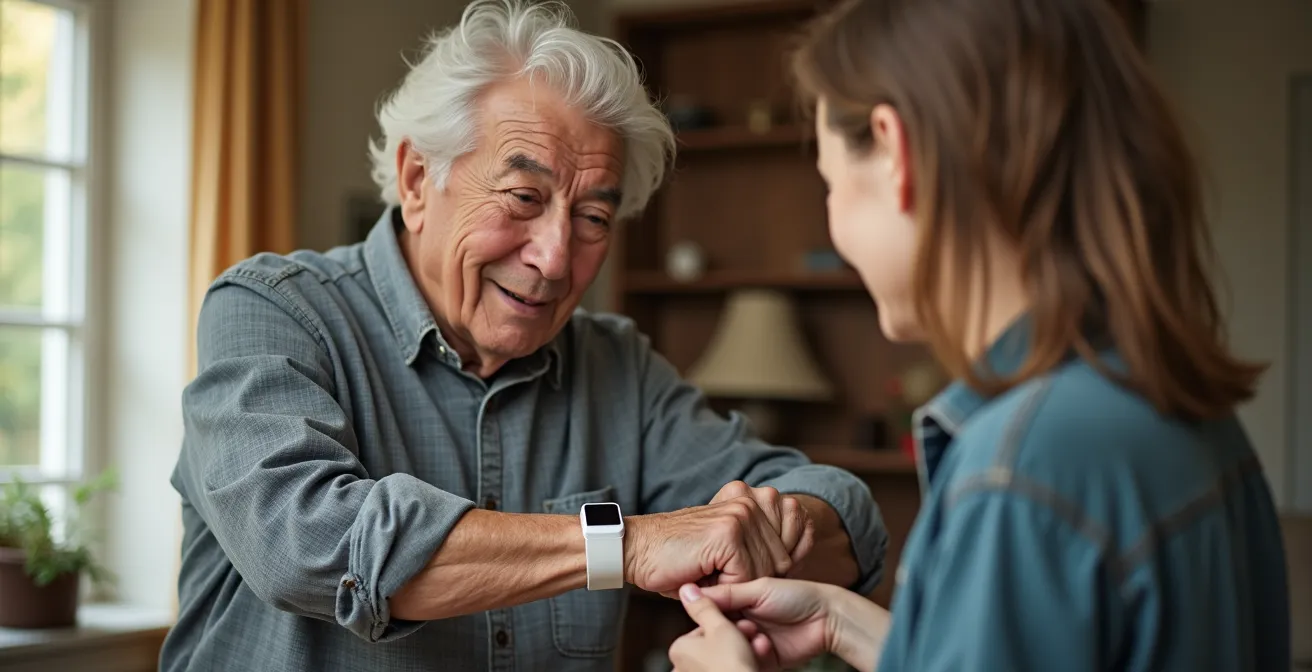
As the image above suggests, this should be a calm, purposeful action. You are not crying wolf; you are performing a necessary system diagnostic. Informing the operator immediately that you are conducting a test allows them to switch from an emergency response mindset to a technical verification one. This is the moment to confirm your location, test signal strength in weak spots, and ensure all your data is correct. A comprehensive monthly test is the single best thing you can do to ensure your system works when you need it most.
Your Monthly System Audit Checklist
- Press the emergency button once and wait for the dispatcher to connect (do not press cancel/reset).
- Immediately inform the operator you are conducting a monthly test.
- Ask the operator to confirm your current GPS location to verify tracking accuracy.
- Test from known weak signal spots (basement, far end of garden) to check coverage.
- Verify and update emergency contacts and protocols with the operator during the call.
- Document the test results, including response time and any issues encountered.
Traditional Landline or Cellular GPS: Which Is Safer for Active Seniors?
The choice between a landline-based system and a mobile cellular one used to be simple. Landline systems were for homebodies, and cellular systems were for those on the go. Today, this distinction is increasingly obsolete. For an active senior, the question is not about landline vs. cellular, but about which ecosystem provides the most robust and redundant coverage for their specific lifestyle.
Traditional landline systems offered perceived reliability due to their hardwired connection, but they are inherently limited to the home and are vulnerable to power outages or cut phone lines. Modern cellular GPS systems provide nationwide coverage, but this is dependent on a single network’s signal strength and the device’s battery. A truly rigorous analysis requires looking beyond these simple categories and examining hybrid solutions that offer the best of both worlds.
The most advanced systems today are hybrid. They may use a landline as a primary connection at home but have a cellular backup. Their mobile components are supported by long-lasting batteries and often leverage multiple cellular networks (like AT&T and Verizon) to ensure the strongest possible signal anywhere. As AARP Caregiving Expert Amy Goyer notes in AARP’s guide on medical alert options, the lines have become incredibly blurred.
Modern ‘traditional’ systems are often not simple landline devices anymore. They have evolved into having cellular backups and long-lasting battery packs to counter power outages and the phasing out of copper landlines, blurring the lines with mobile systems.
– Amy Goyer, AARP Caregiving Expert
This evolution means a comparative analysis must go deeper than the basic connection type, as shown in the following data breakdown.
| Feature | Traditional Landline | Cellular GPS | Hybrid Ecosystem |
|---|---|---|---|
| Monthly Cost | $29.95 | $43.95 | $41.95 |
| Coverage Range | 1,300 ft from base | Nationwide cellular | Both home + mobile |
| Power Outage Protection | Limited backup | Battery dependent | 30+ hour backup |
| GPS Tracking | No | Yes | Yes |
| Fall Detection Available | Yes ($5/mo extra) | Yes ($5/mo extra) | Yes (included) |
| Network Options | Landline only | AT&T or Verizon | Multiple networks |
The “Shower Trigger” Problem and How to Prevent It
The bathroom is statistically one of the most common places for a fall to occur, making it essential that a medical alert device be worn in the shower. This introduces a significant technical challenge known as the “shower trigger” problem: the fear that the device will either be damaged by water or, more commonly, trigger a false alarm due to being dropped or from the force of the water. This fear leads many to remove the device, creating a dangerous gap in their safety net.
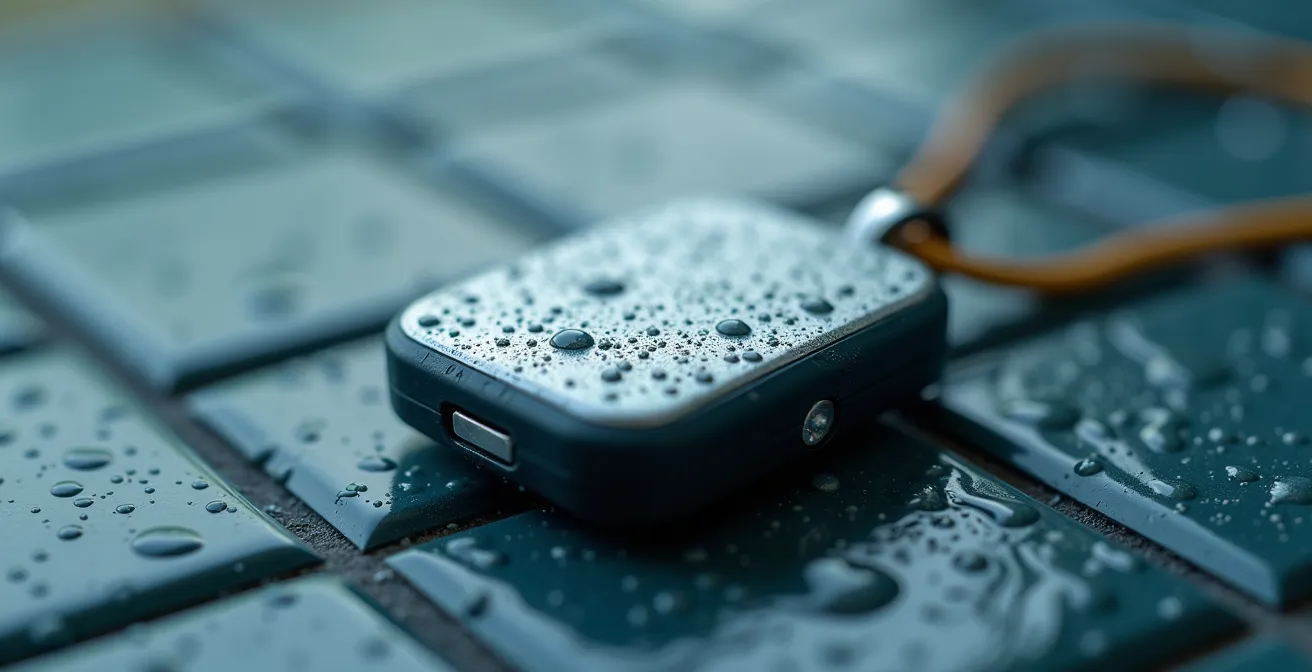
To address the first concern, modern medical alert pendants are built to rigorous waterproof standards. Reputable devices are typically rated IP67 or higher. According to international standards, IP67 devices can be submerged in 3.3 feet of water for 30 minutes without damage. This is more than sufficient to handle any shower, ensuring the device remains functional.
The second concern—false alarms—is being solved by more sophisticated technology. Early fall detection systems relied solely on an accelerometer, which could be easily fooled. The best modern systems use a multi-sensor approach, combining data from an accelerometer, a gyroscope (measuring orientation), and a barometer (measuring sudden changes in air pressure) to build a much more accurate picture of the user’s movement.
Case Study: Multi-Sensor Fall Detection
An independent evaluation of fall detection tech highlighted the performance of the MGMini Lite device. The system demonstrated 80% accuracy in detecting test falls with zero false alarms during a weeklong evaluation. Its algorithm uses multi-sensor data and, crucially, incorporates a post-event voice prompt asking, “Did you fall?” This final step allows the user to cancel a false alarm simply by responding, effectively solving the “shower trigger” problem by distinguishing real emergencies from everyday movements.
How to Install a Key Lockbox So Paramedics Don’t Break Your Door?
An often-overlooked but critical link in the emergency response chain is physical access. You can have the fastest alert system in the world, but if paramedics arrive at a locked door, they face a difficult choice: waste precious time searching for a hidden key or force entry, resulting in a broken door and a costly repair. A secure, accessible key lockbox is the professional solution to this problem.
The lockbox code is given to your monitoring center and stored securely in your profile. When you trigger an alert, the dispatcher relays this code to the emergency services, allowing them immediate, non-destructive entry. However, the placement and type of lockbox matter. The goal is to make it easy for first responders to find but difficult for a potential thief to spot or tamper with. Strategic placement is key.
When choosing a location, consider these factors:
- Visibility and Discretion: It should be findable from the street but not at eye-level or in an obvious spot. A side entrance or a discrete location on a porch post is better than right next to the front door.
- Accessibility: Install it at a height that is comfortable for someone to use, not too high or too low.
- Lighting: Ensure the area is illuminated by a porch light for nighttime access.
- Security: If you have a security camera, position the lockbox within its line of sight.
The market now offers two main types of solutions: the traditional mechanical lockbox and the modern smart lock. A mechanical lockbox is a simple, durable, and cost-effective one-time purchase with no power requirements. A smart lock is more expensive and requires batteries, but offers advanced features like remote access via an app and the ability to generate temporary, time-sensitive codes for emergency personnel. The choice depends on your budget and comfort with technology, but either option is vastly superior to leaving first responders locked out.
How to Use a Communication Log to Keep Family and Caregivers Aligned?
In an emergency, confusion is the enemy. When multiple family members and caregivers are involved, a lack of clear communication can lead to duplicated efforts or, worse, dangerous assumptions. A communication log is the solution, but the traditional paper notebook on the counter has been superseded by a far more powerful tool: the integrated caregiver app provided by many medical alert companies.
These modern digital logs transform the communication process from a passive record into an active, real-time “Care Hub.” They provide a centralized platform where designated family members can see vital information, coordinate actions, and stay aligned. This is a critical component of the emergency response ecosystem, extending its reach to the user’s personal support network.
A robust communication protocol, established before an emergency, is essential for these tools to be effective. The family must decide on a clear plan of action.
- Define a primary contact who receives the first call from the monitoring center.
- Establish a “phone tree” of secondary contacts for different times or situations.
- Specify which alerts are sent to whom (e.g., a fall alert goes to everyone, while a low-battery warning goes only to the primary tech support person).
- Use shared notes in the app to document medical conditions, medications, and physician contact information.
Case Study: The Digital Care Hub
Bay Alarm Medical’s caregiver app, as detailed in an NCOA review, serves as a prime example. It provides real-time alerts, location history, device battery status, and a secure family messaging channel. During testing, family members received fall detection notifications within 16 seconds and could track the user’s location on a map. This demonstrates how a digital log moves beyond simple notes to provide actionable, real-time data that enhances coordination and peace of mind for the entire family.
Wearables or Bed Sensors: What Is Best for Sleep Apnea Detection?
The expansion of wearable technology has moved health monitoring beyond just emergency alerts. Devices now claim to track a host of wellness metrics, including sleep patterns and potential indicators of conditions like sleep apnea. This raises a critical question for users and their families: can a consumer wearable replace a clinical study? The short answer is no, but the nuanced answer is more complex.
Consumer-grade devices, whether they are wrist-worn wearables or under-mattress bed sensors, are powerful tools for data collection. They can monitor heart rate, blood oxygen levels (SpO2), and movement throughout the night, providing a long-term picture of sleep quality that a single night in a sleep lab cannot capture. A pattern of frequent awakenings or repeated dips in SpO2 can be a powerful indicator that a conversation with a doctor is warranted.
However, it is crucial to maintain a rigorous, expert perspective on the role of this technology. These devices provide clues, not diagnoses. Their value lies in their ability to flag potential issues and provide data to justify a formal medical evaluation. As occupational therapist Linda Schlenker states in a review by medical experts at SeniorLiving.org, their role must be framed correctly within the broader health ecosystem.
Consumer-grade devices provide indicative data, not a medical diagnosis. Frame their role within the broader health ecosystem as a powerful, non-invasive tool for collecting long-term data to justify and inform a clinical sleep study.
– Linda Schlenker, Occupational Therapist
Therefore, the choice between a wearable or a bed sensor for sleep apnea *detection* is less about which is “best” and more about which device the user will consistently use to gather indicative data. The ultimate goal is not self-diagnosis, but informed consultation with a healthcare professional.
Key Takeaways
- A medical alert system’s true value is in its end-to-end response chain, not just the device’s features.
- Monthly testing must be comprehensive, verifying the entire chain from GPS location accuracy to dispatcher communication.
- Distinguishing between passive data collection (standard smartwatches) and an actionable, monitored emergency response is the most critical decision factor.
Smartwatches or Medical Alerts: Which Device Best Detects Irregular Heartbeats?
The line between consumer smartwatches and dedicated medical alerts has never been more blurred, especially with the introduction of FDA-cleared ECG and irregular heartbeat notifications on popular watches. For an active senior concerned about cardiac health, this creates a confusing choice. A standard smartwatch can alert *you* to a potential issue, but a monitored medical alert system alerts *a team of professionals* who can help you.
This is the fundamental difference: data collection vs. actionable response. A smartwatch with AFib detection is an exceptional data collection tool. It empowers you with information to share with your doctor. A medical alert with cardiac monitoring is part of an emergency response ecosystem. When it detects an issue, it doesn’t just display a notification; it connects you to a trained dispatcher who can assess the situation, provide reassurance, and dispatch emergency services if needed. The response time is measured in seconds.
Testing results show that a medical alert system with cardiac monitoring can have an average response time of 10-15 seconds from event to dispatcher connection. This speed is simply not part of a standard smartwatch’s design. However, hybrid devices are emerging that aim to offer both.
Case Study: The Hybrid Smartwatch Medical Alert
Bay Alarm Medical’s SOS Smartwatch exemplifies this new category. It combines FDA-cleared ECG/AFib detection capabilities with a 24/7 human monitoring service. The device not only informs the wearer of a detected irregular heartbeat but simultaneously connects them to trained professionals. This closes the loop between data and action, demonstrating the critical difference between a standalone consumer device and a fully integrated emergency response system.
The best device, therefore, depends on the user’s primary goal. If the goal is long-term data tracking for non-emergency consultations, a standard smartwatch may suffice. If the goal is a rapid, professionally-managed response to a potential cardiac event, a monitored medical alert system—even one in a smartwatch form factor—is the superior analytical choice.
Your next step is to rigorously question providers not on their feature lists, but on their end-to-end testing protocols, dispatcher training, and the proven reliability of their entire response ecosystem. Choose the most dependable system, not the most feature-rich device.