

The key to getting insurance to pay for hearing aids is to reframe them from a quality-of-life accessory into a medically necessary device for preventing catastrophic long-term costs.
- Untreated hearing loss is a major modifiable risk factor for dementia and falls, making hearing aids a form of preventative care.
- Insurance “coverage” is often misleading; you must understand the “allowable amount” to know your true out-of-pocket cost.
Recommendation: Build a case for medical necessity by documenting how specific hearing aid features address safety risks and help prevent cognitive decline, using the templates in this guide.
The moment you see the price tag—$5,000, maybe more—for a pair of high-quality hearing aids, the feeling can be overwhelming. For many seniors, this isn’t just a purchase; it’s a major financial decision that feels out of reach. The common advice is to “check your policy” or “look for cheaper options,” but this approach often leads to dead ends or inadequate solutions. While some explore over-the-counter (OTC) devices, they may not be suitable for the specific, nuanced support that prescription devices offer.
The frustration is understandable. You’re told to take care of your health, yet the tools you need seem financially inaccessible. But what if the strategy wasn’t about finding a cheaper device, but about changing the very nature of the conversation with your insurance provider? The true key lies in shifting the argument away from simply “hearing better” and toward a much more powerful concept: preventative healthcare. This is not a luxury item; it’s a critical tool for maintaining your independence, cognitive health, and overall safety.
This guide acts as your personal advocate. We will dismantle the financial barriers piece by piece, providing you with a clear, strategic playbook. We’ll explore why inaction is the most expensive option, how to decode insurance jargon, and how to build an irrefutable case that positions your hearing aids as a medically necessary investment in your long-term well-being. By the end, you’ll be equipped not just with information, but with a strategy to secure the support you deserve.
To navigate this complex landscape effectively, this article breaks down the process into clear, manageable sections. The following summary outlines the key pillars of your strategy, from understanding the true financial risks to designing a supportive home environment.
Summary: Your Strategic Guide to Hearing Aid Coverage
- Why Uncorrected Hearing Loss Is a Financial Risk to Your Independence
- How to Apply for Government Grants for Hearing Devices
- Prescription Devices or Over-the-Counter Amplifiers: What Does Insurance Cover?
- The “Percentage Covered” Trap That Still Leaves You With a Huge Bill
- When to Upgrade Your Hearing Aids to Qualify for New Benefits?
- Why Untreated Hearing Loss Is a Major Risk Factor for Dementia?
- Why Hearing Aids Are Cheaper Than the Cost of Cognitive Decline?
- How to Design a Living Room That Encourages Conversation and Memory?
Why Uncorrected Hearing Loss Is a Financial Risk to Your Independence
The initial sticker shock of a hearing aid is real, but it pales in comparison to the hidden, long-term costs of leaving hearing loss unaddressed. This “cost of inaction” is not just a vague concept; it’s a measurable financial risk that can erode your savings and threaten your independence. When communication becomes a struggle, it often leads to social withdrawal, a key contributor to depression and other health issues that carry their own significant treatment costs. The risk of falls, which increases with untreated hearing loss, can result in hospital bills and the need for in-home care.
Furthermore, difficulty hearing in professional or work settings can lead to reduced earning capacity or even forced early retirement, directly impacting your financial stability. These are not just possibilities; they are the documented consequences that form the foundation of your argument for insurance coverage. Insurers are in the business of risk management, and framing hearing aids as a tool to mitigate these larger, more expensive future risks is a powerful strategy.
While some financial support exists, it’s often limited. For instance, recent HearingTracker research found that the average amount covered by insurance is only $1,257 per hearing aid, leaving a substantial gap. This is precisely why you must pivot the conversation from the device’s price to the cost of the problems it prevents. Calculating these potential future expenses—from increased medical care to the need for family caregiver support—reveals that a hearing aid isn’t an expense, but a crucial, cost-effective investment in maintaining your autonomy.
How to Apply for Government Grants for Hearing Devices
Even with a strong medical necessity argument, some insurance plans remain inflexible. This is not a dead end; it’s a signal to activate a parallel strategy of seeking external funding. A multitude of government, state, and non-profit programs exist specifically to help individuals acquire hearing devices. The key to success is not to apply randomly, but to use a strategic, layered approach, starting with the programs for which you have the strongest eligibility.
Your first layer should be state-level programs. If you are still employed or actively seeking work, your state’s vocational rehabilitation (VR) services are an excellent starting point. These programs are designed to provide tools and resources that help people maintain employment, and hearing aids often qualify as a necessary accommodation. For those not in the workforce, other avenues open up.
The second layer involves civic and national foundations. Organizations like the Lions Club International have local chapters with robust hearing aid assistance programs. Similarly, national foundations such as the Miracle-Ear Foundation or Help America Hear are dedicated to this cause. It is also wise to explore less obvious sources. Many universities with audiology programs have clinics that offer services on a sliding-scale fee basis or have access to research grants that can subsidize the cost of devices. By methodically working through these layers, you significantly increase your chances of securing the funding you need.
Prescription Devices or Over-the-Counter Amplifiers: What Does Insurance Cover?
The hearing device market has expanded, offering more choice than ever before. However, this variety can also create confusion, especially regarding what insurance is willing to cover. The primary distinction is between prescription hearing aids, over-the-counter (OTC) hearing aids, and personal sound amplification products (PSAPs). Understanding their differences is critical to your insurance strategy. Prescription hearing aids are Class I or Class II medical devices programmed by an audiologist for your specific hearing loss profile. Because they are medically prescribed, they have the strongest chance of being covered, often classified as durable medical equipment (DME).
OTC hearing aids, intended for mild to moderate hearing loss, are a newer category. While more accessible and affordable, they are rarely covered by insurance because they are considered elective, consumer electronics. PSAPs are not medical devices at all; they are simply amplifiers for people with normal hearing and are never covered. Unfortunately, many states do not mandate coverage for adults, making the fight an uphill battle. As of 2024, research shows only 6 states currently mandate insurance coverage for adult hearing aids: Arkansas, Connecticut, Illinois, New Hampshire, Rhode Island, and Washington State. If you don’t live in one of these states, the “medical necessity” argument becomes even more vital.

The table below breaks down the crucial differences in cost and coverage, highlighting why pursuing coverage for a prescription device is often the most financially sound long-term strategy, despite the higher initial price.
| Device Type | Average Cost | Insurance Coverage | 5-Year Total Cost |
|---|---|---|---|
| Prescription Hearing Aids | $2,000-$7,000 | May be covered as DME or prosthetics | $3,000-$8,500 with maintenance |
| OTC Hearing Aids | $100-$2,500 | Rarely covered, considered elective | $500-$3,500 with replacements |
| Personal Amplifiers (PSAPs) | $50-$500 | Never covered | $200-$1,500 with replacements |
The “Percentage Covered” Trap That Still Leaves You With a Huge Bill
One of the most frustrating experiences in dealing with insurance is discovering that their definition of “coverage” doesn’t match yours. Many people are told their plan covers 80% of the cost, only to receive a bill that is far higher than expected. This is due to a crucial, often-hidden term: the “allowable amount”. This is the maximum price an insurance company has negotiated with providers for a specific service or device, and it is almost always lower than the retail price.
Here’s how the trap works: a hearing aid is billed at $3,000. You believe your 80% coverage means the insurer pays $2,400, leaving you with a $600 bill. However, if the insurer’s “allowable amount” for that device is only $1,500, they will pay 80% of *that* figure, which is $1,200. You are responsible for the remaining 20% ($300) plus the entire difference between the retail price and the allowable amount ($1,500). Your final bill is a shocking $1,800, not $600. This is why you must always ask your insurer for the specific allowable amount for the hearing aid CPT code before making a decision.
The only way to overcome this and push for better coverage is with a bulletproof Letter of Medical Necessity. This document, co-signed by your audiologist and primary care physician, reframes the hearing aid as an essential medical intervention. It must go beyond a simple diagnosis and connect your hearing loss to specific, documented risks like falls, social isolation, or cognitive decline. It is your single most powerful tool for forcing an insurer to reconsider their classification of the device.
Your Action Plan: Building a Bulletproof Letter of Medical Necessity
- Include specific medical diagnosis codes linking hearing loss to safety concerns (e.g., risk of falls, inability to hear smoke alarms).
- Detail how advanced features like directional microphones or noise reduction are necessary to function in your specific daily environments (e.g., work, family gatherings).
- Reference relevant medical studies from respected sources like The Lancet or Johns Hopkins on the link between hearing loss and cognitive decline.
- Document any failed attempts with more basic devices or amplifiers to prove that a high-quality, prescribed device is the only viable solution.
- Attach all supporting documents, including your complete audiogram results and the formal written recommendation from your audiologist.
When to Upgrade Your Hearing Aids to Qualify for New Benefits?
Securing coverage for your first pair of hearing aids is a major victory, but it’s not the end of the journey. Hearing aid technology evolves rapidly, and your hearing needs can change over time. Understanding the lifecycle of your insurance benefits is key to ensuring you always have access to the best possible technology for your needs. You should not view your hearing aids as a one-time purchase, but as part of an ongoing healthcare plan.
Most insurance plans that offer a hearing aid benefit operate on a renewal cycle. While policies vary, a common timeframe is that most insurance plans offer a new hearing aid allowance every 3 to 5 years. It is absolutely critical to mark this date on your calendar. This renewal is your opportunity to upgrade to a device with superior features that can better address your hearing needs, especially if they have progressed. As technology improves, new features like advanced noise reduction, better directionality, and Bluetooth connectivity become available, which can be justified as medically necessary for safety and social participation.
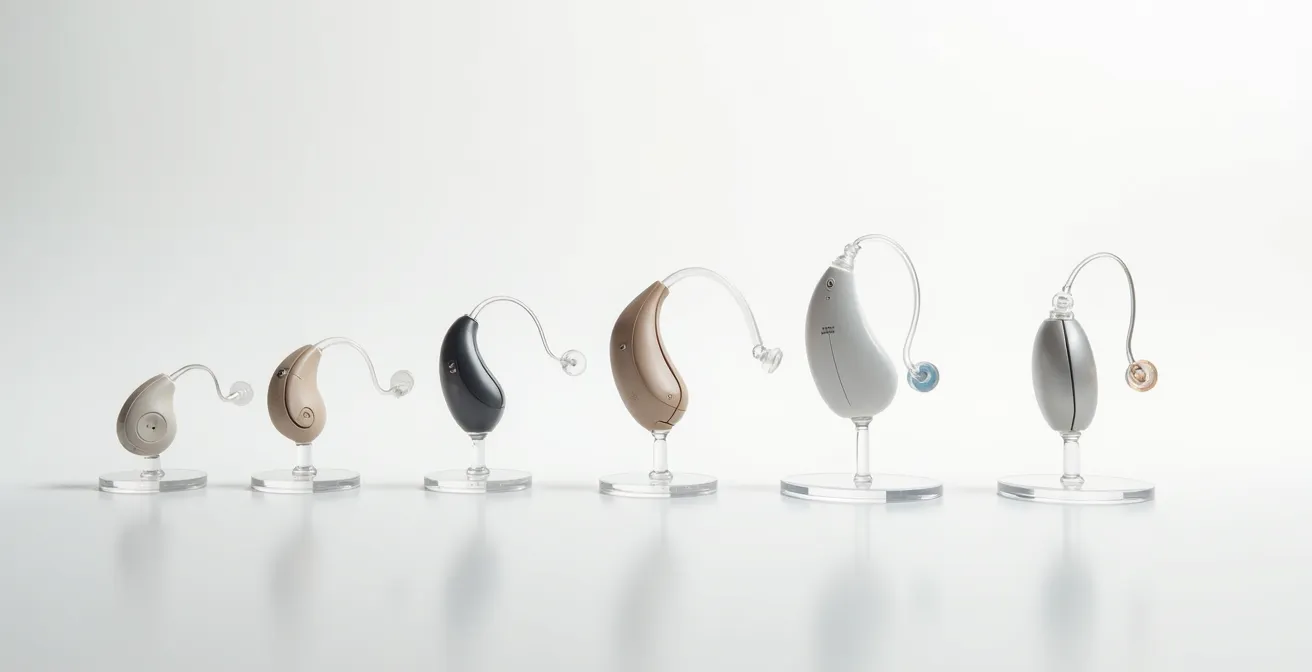
A strategic upgrade is not about chasing the newest gadget. It’s about reassessing your health. If your hearing has declined or if you’ve developed related conditions like tinnitus, you have a strong new case for medical necessity. Your audiologist can document these changes and recommend specific new technology that addresses them. This allows you to submit a fresh appeal to your insurance, armed with new evidence, to secure coverage for a device that will better support your health and independence for the years to come.
Why Untreated Hearing Loss Is a Major Risk Factor for Dementia?
The most powerful argument in your arsenal for proving medical necessity is the well-established link between untreated hearing loss and cognitive decline. For years, major medical research institutions have been sounding the alarm. A landmark 2020 report by the Lancet Commission on dementia prevention identified hearing loss in midlife as the single largest potentially modifiable risk factor for developing dementia, greater than smoking, high blood pressure, or lack of exercise.
The connection works in three primary ways. First, there is cognitive load. When your brain has to work overtime just to decode and understand sound, it diverts resources away from other crucial functions like memory and executive thinking. Over years, this constant strain can exhaust cognitive reserves. Second is brain atrophy. The parts of your brain responsible for processing sound can shrink from lack of stimulation, which can affect overall brain structure and function. Finally, hearing loss leads to social isolation. Avoiding conversations and social gatherings because you can’t follow along starves your brain of the complex stimulation it needs to stay healthy.
This is not speculation; it is scientific consensus. Groundbreaking research from Johns Hopkins University showed that seniors with untreated hearing loss had rates of cognitive decline that were 30-40% faster than their peers with normal hearing. This evidence transforms a hearing aid from a device that helps you hear conversations into a preventative medical tool that helps protect your brain. When you present this data to an insurance company, you are no longer asking them to pay for a convenience; you are asking them to invest in preventing a far more costly and devastating long-term condition.
Why Hearing Aids Are Cheaper Than the Cost of Cognitive Decline?
The financial case for hearing aids becomes undeniable when you compare their cost to the staggering expense of managing cognitive decline. An investment of a few thousand dollars today can prevent hundreds of thousands of dollars in future costs related to memory care, in-home assistance, and lost wages for family caregivers. This is the most compelling economic argument you can make to an insurance provider, as it aligns directly with their goal of minimizing large, long-term payouts.
Presenting this data transforms the conversation. You are no longer a patient asking for a benefit; you are a proactive partner in risk management. You are demonstrating that authorizing payment for a hearing aid is the most fiscally responsible decision the insurer can make. The numbers show that the cost of inaction is not a risk, but a certainty. The one-time cost of a hearing aid is a small, predictable expense compared to the unpredictable and financially devastating trajectory of untreated cognitive decline.
The following table provides a conservative 10-year estimate, illustrating the stark financial difference between investing in hearing health and facing the potential costs of cognitive decline. These figures powerfully reframe the initial price of hearing aids as a sound and necessary investment.
This comparison, based on data from various health and elder care resources, makes the financial choice clear, as detailed in analyses of long-term care expenses.
| Investment/Cost Category | With Hearing Aids | Without (Cognitive Decline Risk) |
|---|---|---|
| Initial Device Cost | $4,700 average | $0 |
| Maintenance (10 years) | $2,000 | $0 |
| In-Home Care (if needed) | Lower probability | $50,000+/year |
| Family Caregiver Lost Wages | Minimal | $30,000+/year |
| Total 10-Year Estimate | $6,700 | $200,000-$500,000 |
Key Takeaways
- The true cost of hearing loss is not the device, but the long-term expenses of cognitive decline, falls, and social isolation.
- Frame your insurance appeal around medical necessity, using the link between hearing loss and dementia as your core evidence.
- Understand the “allowable amount” trap to avoid surprise bills, and always seek alternative funding through grants and foundations.
How to Design a Living Room That Encourages Conversation and Memory?
Your strategy for better hearing shouldn’t stop at the audiologist’s office. A truly “holistic hearing plan”—the kind that can bolster an insurance appeal—considers your entire environment. The acoustics of your home, particularly your living room, can either help or hinder your ability to communicate effectively, even with the best hearing aids. A room with many hard surfaces like hardwood floors, large windows, and high ceilings creates an echo chamber, making it incredibly difficult for a hearing aid to distinguish a speaker’s voice from background noise.
By making simple, strategic changes to your living room, you can create a more conversation-friendly space. The goal is to absorb sound, not reflect it. This can be achieved by:
- Introducing soft textures: Area rugs, plush upholstered furniture, heavy curtains, and even fabric wall hangings or tapestries can dramatically reduce reverberation.
- Arranging furniture for conversation: Position chairs and sofas closer together and facing each other to create natural “conversation zones.” This reduces the distance sound has to travel and improves clarity.
- Breaking up flat surfaces: A well-stocked bookshelf is not just for books; it’s an excellent sound diffuser, breaking up sound waves before they can bounce around the room.
This approach has been used successfully in insurance appeals. For example, some residents in Colorado successfully argued for advanced hearing aids by documenting their challenging home acoustics. They proved that basic devices were insufficient and that models with advanced directional microphones were medically necessary to function in their specific living environment.

By demonstrating that you have taken proactive steps to optimize your environment, you strengthen your case that you require a high-performance medical device, not a simple amplifier. It shows you are an informed and engaged partner in your own healthcare, making it harder for an insurer to deny your claim.
Now that you are equipped with the evidence, strategies, and tools, the next step is to take action. Begin by scheduling an appointment with an audiologist to get a comprehensive hearing evaluation and start building the case for the medically necessary device that will protect your financial, social, and cognitive future.