

Contrary to popular belief, the fear of being a “burden” is not solved by striving for more independence, but by embracing dignified interdependence.
- This fear is often a symptom of “internalized ageism”—a societal pressure we turn against ourselves.
- Shifting from “asking for help” to “collaborating on challenges” transforms the dynamic from dependence to partnership.
Recommendation: Start by identifying one small, recurring task and reframe it as a collaborative project with a family member, focusing on the shared time rather than the help needed.
That quiet fear, the one that whispers you might be becoming a burden to your family, is a heavy weight to carry. It’s a voice that suggests your needs are an inconvenience, that your presence costs more than it contributes. For many seniors, this feeling is a constant, subtle hum beneath the surface of daily life. The common advice is to “talk about it” or “try to stay independent longer,” but this often misses the point. It places the responsibility squarely on your shoulders, suggesting that if you just tried a little harder, you wouldn’t feel this way. It ignores the deep-seated societal pressures that equate aging with decreasing value.
But what if this fear isn’t a personal failing at all? What if it’s a predictable response to a culture that glorifies hyper-independence and quietly dismisses the wisdom and experience that come with age? The solution isn’t to deny your needs or push yourself to a breaking point to avoid asking for help. The true path forward lies in a radical reframing of the situation. It’s about moving from a mindset of dependence to one of powerful, dignified interdependence, where connection is a strength and mutual support is a gift, not a transaction.
This guide is designed to help you dismantle that fear from the inside out. We will explore the psychological roots of feeling like a burden, provide concrete strategies for communicating your needs with confidence, and show how staying connected is not just a social nicety, but a vital component of your physical and mental health. It’s time to change the narrative from one of liability to one of legacy and lasting connection.
Summary: Navigating the Emotional Landscape of Aging with Confidence
- Why Internalized Ageism Makes You Feel Older Than You Are?
- How to Ask for Help With Dignity and without Guilt?
- Peer Support Groups or Private Therapy: Which Is Better for Aging Anxiety?
- The “I’m Not Old” Mindset That Leads to Preventable Accidents
- How to Stay Tech-Relevant to Connect With Your Grandchildren?
- Why Isolation Accelerates Memory Loss More Than Genetics?
- Why Staying Visible in Your Community Matters for Mental Health?
- Why Social Connection Is as Vital as Medication for Heart Health?
Why Internalized Ageism Makes You Feel Older Than You Are?
The feeling of being a “burden” doesn’t materialize out of thin air. It is often the direct result of something called internalized ageism. This is what happens when we absorb the negative stereotypes and beliefs about aging that are prevalent in our society and start applying them to ourselves. We see commercials celebrating youth, hear jokes about “senior moments,” and are surrounded by a culture that often equates value with productivity and independence. Over decades, these messages sink in, creating a subconscious belief that needing help is a sign of failure and that our worth diminishes as our physical capabilities change.
This internal narrative is incredibly powerful. It can make you feel older, less capable, and more dependent than you actually are. It’s the voice that tells you not to bother your children with a small request or to feel shame when you can no longer manage a task that was once easy. It’s a self-fulfilling prophecy; by believing we are less valuable, we begin to act in ways that isolate us, leading to the very dependence we fear. A national poll on healthy aging confirms this is a widespread issue, revealing that over 82% of older adults regularly experience at least one form of everyday ageism, with a significant portion internalizing these beliefs.
Recognizing internalized ageism is the first step toward dismantling it. When that voice of self-criticism arises, learn to identify it not as your own, but as an echo of a societal bias. You are not the problem; the narrative is. By challenging this internal critic, you can begin to separate your self-worth from your level of independence and reclaim a more accurate, compassionate view of yourself and the aging process. This isn’t about ignoring challenges; it’s about facing them without the added weight of unearned shame.
How to Ask for Help With Dignity and without Guilt?
The fear of asking for help is rooted in the dread of shifting from a parent or provider to a dependent. This anxiety is incredibly common; research indicates that nearly 50% of aging parents say they’re worried about being a burden to their children. The key to overcoming this is to stop thinking about “asking for help” and start framing it as “inviting collaboration.” You are not surrendering your autonomy; you are creating opportunities for partnership and connection. This subtle but profound shift in language and mindset changes the entire dynamic.
Instead of saying, “I can’t do this anymore, I need your help,” try a collaborative approach. For example: “I’m looking at ways to make the kitchen safer and more efficient. I’d love to get your thoughts and work on a plan together.” This positions your adult child as a respected partner and consultant, not a reluctant caregiver. It transforms a task from a burden into a shared project. You are leveraging their skills and your wisdom to achieve a common goal: your well-being. This approach preserves dignity because it is based on teamwork, not neediness.
To make this collaboration successful, focus on clear and specific “asks.” Vague requests like “I need more help around the house” can feel overwhelming and create resentment. Instead, be concrete: “Would you be able to partner with me on grocery shopping once a week?” or “Let’s set aside an hour on Saturday to organize these cabinets together.” This clarity gives your family defined, manageable ways to contribute, allowing them to feel successful and helpful rather than burdened. It’s about managing tasks together, preserving the relationship as one of mutual respect and care.
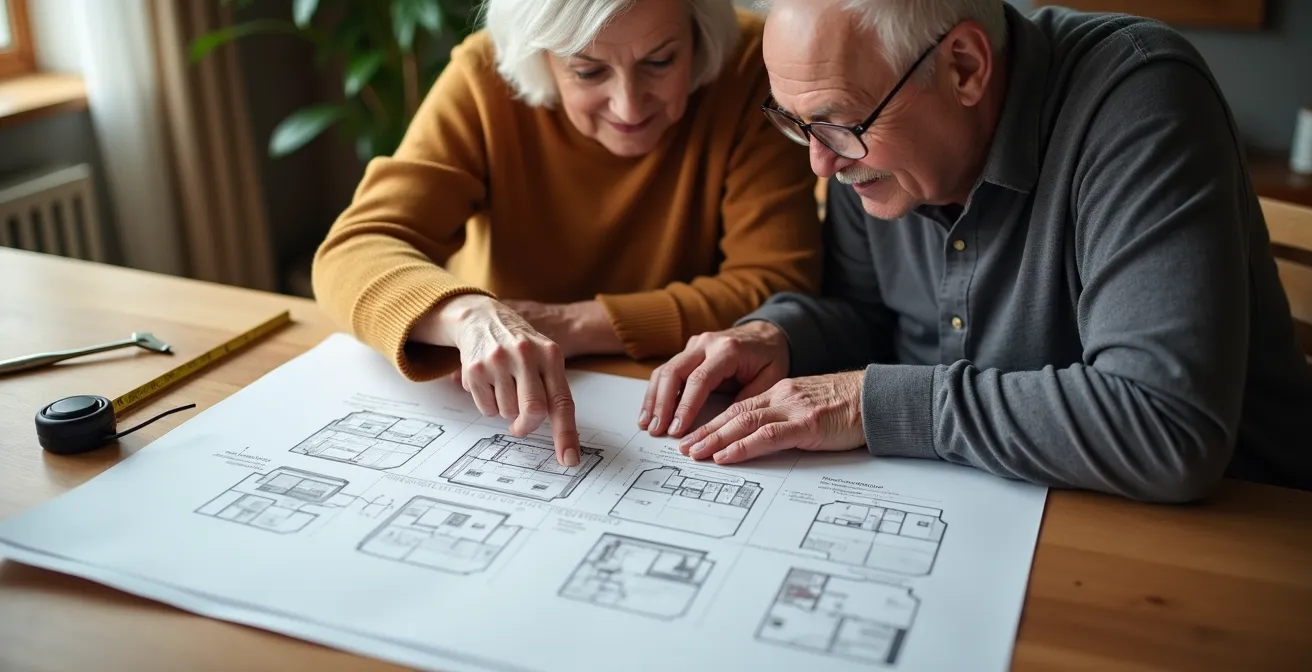
This image of partnership, of working together on a plan, is the very essence of dignified interdependence. It’s about combining strengths. Your experience and knowledge of your own home and needs, combined with the physical ability or fresh perspective of your family member, create a better outcome for everyone. This is not dependence; it is smart, strategic collaboration that strengthens family bonds.
Peer Support Groups or Private Therapy: Which Is Better for Aging Anxiety?
Confronting the deep-seated fears around aging and dependency is not a journey you have to take alone. Seeking support is a sign of strength and self-awareness. Two powerful avenues are peer support groups and private therapy, each offering distinct benefits for managing aging-related anxiety. The right choice depends on the nature of your concerns, your comfort level, and your specific goals. Neither is inherently “better,” but one may be a better fit for you right now.
Peer support groups offer a sense of community and normalization. Being in a room (whether virtual or physical) with others who share your unspoken fears can be incredibly validating. It shatters the illusion that you are the only one struggling with these feelings. These groups are excellent for combating loneliness, sharing practical coping strategies, and reducing the stigma around needing help. The focus is on mutual support and shared experience, which can build confidence and create lasting friendships.
Private therapy, on the other hand, provides a confidential, one-on-one space with a trained professional, such as a geriatric therapist. This is ideal for untangling deeper, more personal issues, such as how past experiences or family dynamics are fueling your current anxieties. A therapist can help you identify the specific triggers of your internalized ageism and develop personalized cognitive strategies to challenge and reframe those negative thought patterns. As the American Association for Geriatric Psychiatry notes, professional intervention is a powerful tool. They state:
Treatment can involve medication, therapy, stress reduction, coping skills, and family or other social support. Medication will not cure anxiety disorders but will keep them under control while the person receives therapy.
– American Association for Geriatric Psychiatry, Anxiety and Older Adults: Overcoming Worry and Fear
Ultimately, these options are not mutually exclusive. Many people find that a combination of the two provides the most comprehensive support. The following table breaks down the key differences to help guide your decision, including a third powerful option: purpose-driven groups focused on contribution.
| Aspect | Peer Support Groups | Private Therapy | Purpose-Driven Groups |
|---|---|---|---|
| Best For | Loneliness, normalizing aging experiences | Deep identity issues, past trauma | Finding meaning and contribution |
| Format | Group sharing, mutual support | One-on-one professional guidance | Legacy workshops, mentoring programs |
| Cost | Often free or low-cost | Higher cost, may be covered by insurance | Variable, often community-funded |
| Stigma Level | Lower – seen as social activity | Higher among older generations | Minimal – focused on giving back |
The “I’m Not Old” Mindset That Leads to Preventable Accidents
One of the most common, and dangerous, reactions to the fear of aging is denial. The “I’m not old” mindset is a defense mechanism against the stereotype of frailty. It drives individuals to insist on climbing ladders, carrying heavy loads, or navigating icy sidewalks without assistance, not because they can do so safely, but to prove they don’t need help. While born from a desire for independence, this mindset is a trap. It prioritizes pride over prudence and often leads to the very outcome it seeks to avoid: a sudden loss of independence due to a preventable accident.
The statistics are sobering. Falls are a primary example of how this denial can have devastating consequences. Many falls are preventable with simple modifications, yet the refusal to accept changing physical realities puts countless seniors at risk. According to the CDC, one in three seniors has a fall each year, often resulting in injuries that trigger a significant decline in mobility and a dramatic increase in the need for care. An accident born from denial can instantly create the “burden” scenario that the person was trying so desperately to prevent.
The antidote to this dangerous mindset is not surrender, but proactive adaptation. This means taking control of your environment and making strategic adjustments from a position of strength, not weakness. It’s about future-proofing your life. Installing grab bars in the bathroom isn’t an admission of frailty; it’s a smart, calculated move to ensure your long-term safety and autonomy, just like wearing a seatbelt. Using a walking stick for better stability on uneven ground isn’t giving in; it’s giving yourself the freedom to keep walking confidently.
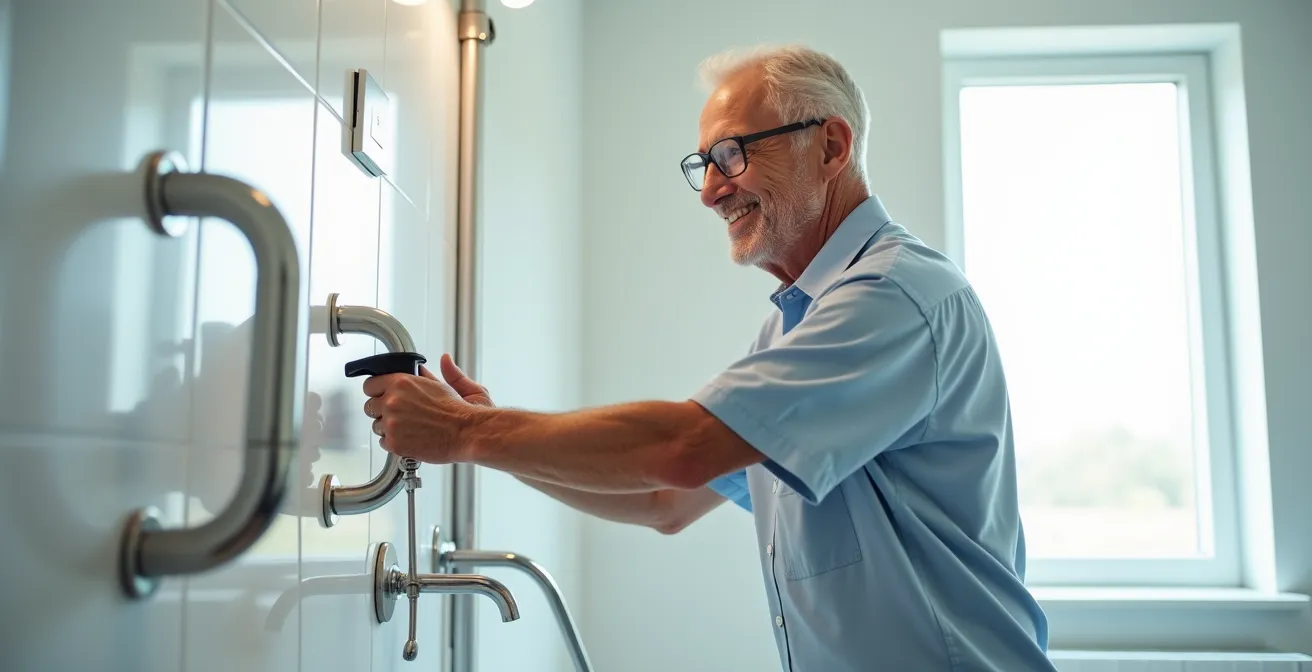
Embracing proactive adaptation is an act of empowerment. It demonstrates foresight, control, and a commitment to your own well-being. By making these changes on your own terms, before an accident forces your hand, you remain the author of your life story. You are not a victim of aging; you are a savvy navigator of it, making intelligent choices to extend your independence and safety for as long as possible.
How to Stay Tech-Relevant to Connect With Your Grandchildren?
One of the most powerful ways to dismantle the feeling of being a “burden” is to actively cultivate your role as a connector and a source of joy in your family. In today’s world, a significant part of that connection happens through technology. While the rapid pace of digital change can feel daunting, viewing technology not as a hurdle but as a bridge to your grandchildren’s world can be transformative. It’s a direct way to remain relevant, engaged, and central to the family fabric.
The key is to avoid trying to learn “everything.” Instead, focus on specific, shared activities that foster connection. The goal isn’t to become a tech wizard; it’s to find common digital ground. This can even become a fun “reverse mentoring” opportunity where your grandchild teaches you a new skill, reinforcing their own sense of competence and value while strengthening your bond. The focus is on the shared experience, not technical mastery. Your willingness to learn their language speaks volumes and keeps you at the heart of their lives.
Start with small, manageable projects that you can do together, either in person or remotely. This creates a positive feedback loop of success and enjoyment, making technology feel less like a chore and more like a playground. Here are a few simple, high-impact ideas to get you started:
- Create a digital family photo album together using a simple service like Google Photos or Apple Photos, where everyone can contribute.
- Build a collaborative Spotify playlist where each generation adds their favorite songs, creating a unique family soundtrack.
- Learn one simple, fun mobile game together that you can play remotely, like Words With Friends or a card game app.
- Ask them to help you set up video call shortcuts on your tablet or phone for easy, one-touch connection.
- Explore grocery or meal delivery apps together, framing it as a fun way to discover new foods while making daily life easier.
Each of these small projects is more than just a tech task; it’s a memory in the making. It sends a clear message that you are invested in their world and are an active, present force in their life. This is the opposite of being a burden—it is being a vital, cherished part of the family’s ongoing story.
Why Isolation Accelerates Memory Loss More Than Genetics?
When seniors withdraw due to the fear of being a burden, they often unknowingly trigger a far greater threat to their independence: social isolation. We tend to think of cognitive decline and memory loss as being primarily dictated by genetics or unavoidable biological processes. However, a growing body of research shows that our social environment plays an astonishingly powerful role. Chronic loneliness and isolation can act as an accelerant for cognitive decline, sometimes having a greater impact than our inherited predispositions.
The brain is like a muscle; it thrives on stimulation, engagement, and novelty. Social interaction is one of its most complex and demanding workouts. A simple conversation requires you to listen, process information, access memories, read non-verbal cues, and formulate a response in real-time. This rich cognitive exercise keeps neural pathways active and resilient. When you are isolated, your brain is deprived of this essential stimulation. The world shrinks, the inputs become monotonous, and the cognitive “muscles” begin to atrophy from disuse.
The scientific evidence for this is compelling and should serve as a serious wake-up call. For instance, long-term research demonstrates a direct, measurable link between social connection and cognitive function. One landmark study following healthy older adults over several years found that social isolation significantly impacts verbal fluency, immediate recall, and delayed recall over time. In essence, the less you connect with others, the harder it becomes for your brain to perform its core functions. This decline is not just a feeling; it is a measurable neurological process.
This understanding completely reframes the act of reaching out. Seeing friends, joining a club, or even just having a regular phone call is not a frivolous social activity. It is a critical, proactive health measure for your brain. By choosing to withdraw, you may be inadvertently hastening the very memory loss that could lead to greater dependency down the line. Staying socially engaged is one of the most powerful tools you have to protect your cognitive health and, by extension, your long-term independence.
Key takeaways
- The fear of being a “burden” is primarily a social construct, not a personal failure. Recognizing it as “internalized ageism” is the first step to liberation.
- Shift your mindset from “needing help” to “inviting collaboration.” This reframes requests as opportunities for partnership and strengthens family bonds.
- Social connection is not a luxury; it is a critical health behavior that directly protects cognitive function and physical well-being. Prioritize it like a prescription.
Why Staying Visible in Your Community Matters for Mental Health?
Withdrawing from community life is a common side effect of feeling like a burden. If you believe you have less to offer, the logical next step is to step back. However, this retreat from visibility is one of the most detrimental things you can do for your mental health. Contribution and purpose are fundamental human needs that do not expire at retirement. Staying visible and engaged in your community—even in small ways—is a powerful antidote to feelings of irrelevance. It actively demonstrates your continued value, both to yourself and to others.
The act of contributing, of being of service to others, triggers what researchers call the “helper’s high.” It’s a rush of positive emotions that comes from making a difference, reinforcing our sense of purpose and self-worth. When internalized ageism makes you doubt your ability to contribute, it can create a vicious cycle. You withdraw, which erodes your sense of purpose, which in turn deepens your feelings of being a burden. The solution is to break that cycle by intentionally seeking out roles where you can share your most valuable asset: your lifetime of experience and wisdom.
You don’t need to be in peak physical condition to make a significant impact. Many high-value contribution roles are not physically demanding. It’s about leveraging your knowledge, your time, and your perspective. Your wisdom is a resource the community needs. By finding a way to share it, you shift from being a passive recipient of care to an active agent of change, which is profoundly beneficial for your mental health.
Your action plan: Finding a high-impact, low-exertion role
- Serve on local advisory boards or committees, many of which now offer participation via Zoom meetings.
- Become a “phone buddy” for another isolated senior through a local charity, providing crucial social connection.
- Participate in citizen science projects from home, such as classifying images for researchers or transcribing historical documents.
- Share your professional skills or life experience as a virtual mentor or tutor for a student or young professional.
- Join online community forums or social media groups to act as a neighborhood historian, sharing stories and context that enrich your local area’s identity.
Each of these roles makes you visible. It reminds the community, and more importantly, it reminds you, that you are still a vital piece of the social fabric. This sense of purpose is a powerful buffer against depression and anxiety, and it fundamentally dismantles the “burden” narrative by replacing it with a story of contribution.
Why Social Connection Is as Vital as Medication for Heart Health?
We have explored the psychological roots of feeling like a burden and the practical steps to reframe your role within your family and community. Now, we arrive at the most critical, science-backed truth: social connection is not optional. It is not a “nice-to-have” or a leisure activity. A robust social life is a biological necessity, as fundamental to your long-term health and survival as proper nutrition, regular exercise, and even prescribed medication.
For decades, medical science has focused on measurable physical risk factors like cholesterol, blood pressure, and blood sugar. While these are undeniably important, we now understand that the quality of our social bonds has a direct and profound impact on our physical bodies. Chronic loneliness acts as a chronic stressor, triggering inflammation, elevating stress hormones like cortisol, and impairing immune function. Research has found that prolonged loneliness can increase the risk of stroke, coronary heart disease, and dementia at rates comparable to well-known physical risk factors like smoking or obesity.
Therefore, you must begin to think of your social life with the same seriousness you apply to your physical health. You schedule doctor’s appointments and remember to take your daily pills. It’s time to apply that same discipline to nurturing your connections. This means proactively scheduling social interactions, not just waiting for them to happen. It means “monitoring” your social health as carefully as you monitor your blood pressure. This is your most powerful prescription for a longer, healthier, and more meaningful life.
To put this into practice, you can create a simple “Social Health Plan.” This isn’t complicated; it’s about being intentional. Here are the core components:
- Schedule It: Put social interactions in your calendar just like medical appointments. A weekly coffee with a friend or a bi-weekly club meeting is a non-negotiable health commitment.
- Go for Depth: Identify one or two deep, supportive relationships to actively nurture. Quality trumps quantity. A heartfelt 30-minute phone call is more beneficial than a dozen superficial social media interactions.
- Embrace “Cognitive Snacks”: Plan one small social outing or call per day. This could be a chat with a neighbor, a trip to the library, or a video call with a grandchild. These small interactions keep your brain engaged.
- Join In: Commit to at least one regular group activity, whether it’s a book club, a walking group, a volunteer organization, or a faith-based community.
By treating your social connections as a vital pillar of your well-being, you are taking the most empowering step possible. You are not just fighting a feeling; you are actively building a life so rich with purpose, connection, and joy that the shadow of being a “burden” can no longer find a place to rest. Your next step is to choose one action from the Social Health Plan and schedule it in your calendar today.