
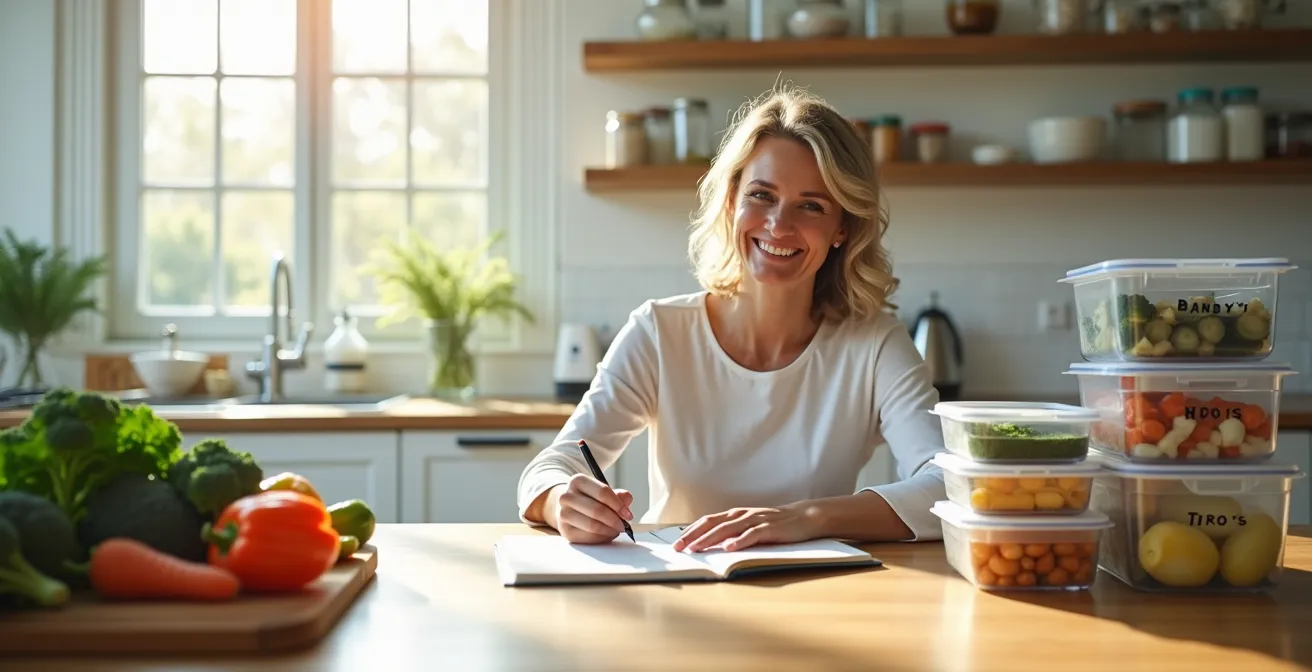
Effective senior meal planning replaces rigid menus with a flexible “food system” that empowers caregivers to assemble delicious, nutrient-dense meals in minutes.
- Focus on prepping individual components (proteins, grains, veggies) instead of full meals for maximum versatility.
- Prioritize nutrient fortification and appetite stimulation through aroma and flavor to combat common senior health challenges.
Recommendation: Build a small, well-labeled inventory of frozen, pre-cooked components and salt-free seasoning blends to make daily meal preparation fast, safe, and enjoyable for both the caregiver and the senior.
Ensuring an older parent receives nutritious, appealing meals can feel like a constant challenge, especially when relying on a caregiver for the daily cooking. The common advice to “plan weekly menus” often falls apart against the reality of fluctuating appetites, food fatigue, and the practical limits of a caregiver’s time and culinary skills. You create a perfect plan, but by Wednesday, your parent doesn’t want chicken, or the fresh vegetables have wilted in the fridge.
The result is often a retreat to the familiar but nutritionally lacking “tea and toast” diet, or an over-reliance on processed foods. While batch cooking is a step in the right direction, it can lead to monotony. The real problem isn’t the lack of a plan; it’s the lack of a flexible system that works for everyone involved.
But what if the solution wasn’t a rigid, seven-day menu, but rather a modular “food system”? This approach focuses on creating a pantry and freezer stocked with ready-to-use components that a caregiver can easily combine into a variety of appetizing, protein-packed meals. It’s about empowering them with the building blocks for success, not just a set of instructions.
This guide will walk you through building that system. We’ll explore how to combat muscle loss, leverage your freezer effectively, overcome physical barriers in the kitchen, and stimulate appetite—all to create a sustainable and enjoyable eating experience for your loved one.
To help you navigate these strategies, this article breaks down the process into actionable steps. The following table of contents outlines the key areas we will cover, from understanding the nutritional stakes to mastering flavor without salt.
Table of Contents: A Practical Guide to Caregiver-Friendly Meal Planning
- Why “Tea and Toast” Is Not Enough for Maintaining Muscle Mass?
- How to Batch Cook Soups and Stews for the Freezer?
- Fresh Produce or Frozen Veggies: Which Is Easier for Consistency?
- The Kitchen Hygiene Error That Puts Seniors at Risk of Food Poisoning
- How to Use Herbs and Spices to Stimulate Appetite Without Salt?
- How to Fortify Your Soups Without Altering the Taste?
- Why Inability to Open Jars Leads to a Diet of Processed Foods?
- How to Meal Prep for a Low-Sodium Diet Without Losing Flavor?
Why “Tea and Toast” Is Not Enough for Maintaining Muscle Mass?
The “tea and toast” syndrome is more than just a convenient snack; it’s a significant contributor to sarcopenia, the age-related loss of muscle mass and strength. As we age, our bodies become less efficient at using the protein we eat, a phenomenon known as anabolic resistance. This means seniors need significantly more protein than their younger counterparts just to maintain their existing muscle.
This isn’t a small difference. Groundbreaking research confirms that older adults require a much higher stimulus to kickstart muscle building. Specifically, studies show that older adults require ~40g of high-quality protein in a single meal to maximize muscle protein synthesis, double the amount needed by younger adults. A diet of simple carbohydrates like toast provides almost none of this crucial building block, accelerating muscle decline and increasing the risk of falls and frailty.
To combat this, every meal and snack should be seen as an opportunity to deliver high-quality protein. The key is to focus on foods rich in the amino acid leucine, which acts as the primary trigger for muscle growth. Integrating these foods is the first step in building a truly effective nutritional plan:
- Morning Boost: Add whey protein powder or Greek yogurt to smoothies and oatmeal.
- Main Meals: Prioritize lean protein sources like chicken breast, fish, and lean beef.
- Smart Snacks: Offer cottage cheese, a hard-boiled egg, or a handful of lentils.
- Plant-Based Power: Incorporate chickpeas, lentils, and tofu into soups and salads.
Shifting the focus from simple carb-based meals to protein-centric ones is the single most important dietary change you can make to protect a senior’s strength and independence.
How to Batch Cook Soups and Stews for the Freezer?
The secret to successful batch cooking for seniors isn’t making giant vats of the same meal. It’s “component prepping”—cooking and freezing individual ingredients that can be quickly assembled into a variety of meals. This approach prevents flavor fatigue and empowers the caregiver to create a “fresh” meal in minutes, tailored to the senior’s appetite of the day.
Think of the freezer not as a graveyard for leftovers, but as a well-organized pantry of meal-building blocks. A caregiver can pull out some pre-cooked shredded chicken, a cube of frozen broth, and a scoop of mixed vegetables to create a nourishing soup in under 10 minutes. This system dramatically reduces daily cooking time and mental load.
This image of a well-organized freezer shows how labeled, portioned containers make it easy to see what’s available at a glance, forming the foundation of a flexible meal system.
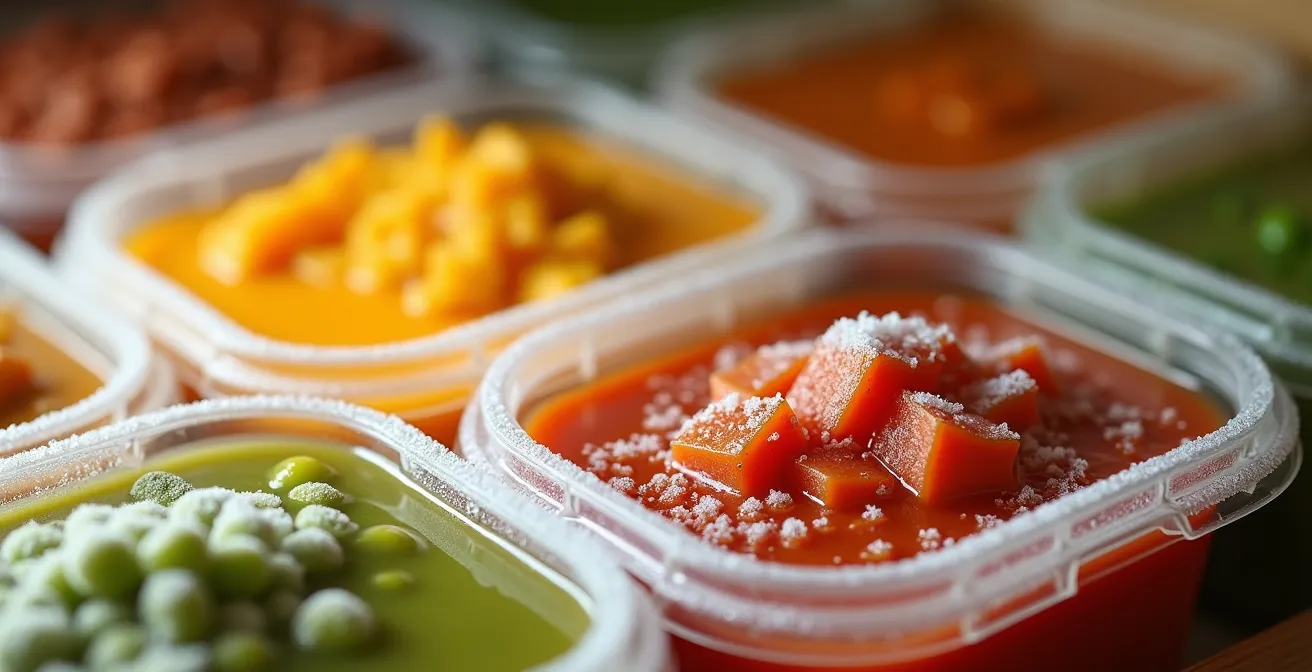
As the picture illustrates, using clear containers and clear labels is crucial. It removes the guesswork and ensures the caregiver can quickly and confidently assemble a balanced meal. This systematic approach is the key to making home-cooked meals as convenient as processed alternatives.
Your Action Plan for a Flexible Freezer Pantry
- Protein Portions: Cook and freeze shredded chicken, ground beef, or flaked fish in 1-cup portions.
- Vegetable Medleys: Blanche and freeze sturdy vegetables like peas, corn, carrots, and green beans.
- Broth Cubes: Freeze homemade or low-sodium broth in ice cube trays for easy portion control.
- Grains on Hand: Cook and freeze meal-sized portions of brown rice, quinoa, or barley.
- Label Everything: Use freezer-safe labels to clearly mark the contents and date on every container.
Fresh Produce or Frozen Veggies: Which Is Easier for Consistency?
There’s a common belief that “fresh is always best,” but when it comes to consistent, easy-to-prepare meals for seniors, frozen vegetables are often the superior choice. Fresh produce has a short shelf life, requires significant prep time (washing, peeling, chopping), and can lead to considerable food waste—all major hurdles for a busy caregiver.
Frozen vegetables, on the other hand, are picked and flash-frozen at peak ripeness, locking in nutrients. They require zero prep time and have virtually no waste, making them an incredibly efficient and cost-effective option. They ensure that a key component of a balanced meal is always on hand, regardless of what’s fresh at the store. As nutrition consultant Leslie Bonci notes in the AARP Caregiving Guide:
If you’re looking for ready-made convenience, frozen foods are recommended. There are many frozen options that are simple and taste good and take no more work than putting in the microwave.
– Leslie Bonci, AARP Caregiving Guide
The data clearly supports the benefits of frozen produce in terms of time, cost, and waste reduction, making it a pragmatic choice for any caregiver-led meal plan. The following comparison highlights just how much time and effort can be saved.
| Vegetable | Fresh (Prep Time) | Fresh (Cost/lb) | Frozen (Prep Time) | Frozen (Cost/lb) | Waste Factor |
|---|---|---|---|---|---|
| Broccoli | 10-15 min | $2.50 | 2-3 min | $1.50 | Fresh: 30%, Frozen: 0% |
| Butternut Squash | 20-30 min | $1.20 | 0 min | $2.00 | Fresh: 40%, Frozen: 0% |
| Green Beans | 5-10 min | $3.00 | 0 min | $1.80 | Fresh: 10%, Frozen: 0% |
| Spinach | 5 min | $4.00 | 0 min | $2.50 | Fresh: 50%, Frozen: 0% |
The Kitchen Hygiene Error That Puts Seniors at Risk of Food Poisoning
For seniors with weakened immune systems, a minor mistake in kitchen hygiene can lead to serious illness. The most common and dangerous error is improper handling and reheating of leftovers. Food that sits in the “danger zone” (between 40°F and 140°F) for too long can grow harmful bacteria, leading to food poisoning. This risk is a significant factor in senior health; data shows that 19% of all hospital readmissions can be traced back to issues with diet adherence and management, which includes food safety.
A caregiver may be excellent at cooking, but without a strict protocol for storing and reheating food, they could unknowingly put a senior at risk. A simple-to-follow system is not just helpful—it’s essential for safety. This includes using a food thermometer to ensure leftovers reach a safe internal temperature and implementing a clear labeling system to avoid confusion.
Here are the non-negotiable rules for a safe kitchen environment that every caregiver must follow:
- Reheat to 165°F (74°C): Always use a food thermometer to check the internal temperature of leftovers. Microwaves can heat unevenly, so stirring and checking is crucial.
- Label Everything: All containers must be labeled with the contents and the date of preparation. A “use by” date (max 3-4 days) is even better.
- Sanitize High-Touch Surfaces: Weekly sanitization of refrigerator handles, can openers, and reusable bags is critical to prevent cross-contamination.
- Clean the Sponge: The kitchen sponge is a primary source of bacteria. It should be sanitized daily, either in the dishwasher or by microwaving it while damp for two minutes.
Implementing a color-coded dot system (e.g., green for ‘safe to eat,’ red for ‘ask first’) can provide an additional layer of safety, empowering the senior while maintaining control over food safety.
How to Use Herbs and Spices to Stimulate Appetite Without Salt?
A declining sense of smell and taste is a common part of aging, often leading to a reduced appetite and disinterest in food. Many seniors compensate by reaching for the saltshaker, which can be dangerous for those on low-sodium diets. The solution isn’t bland food; it’s leveraging the power of aromatic triggers through herbs and spices.
The aroma of food is a powerful appetite stimulant. The simple act of heating herbs and spices releases volatile compounds that travel to the olfactory receptors in the nose, signaling to the brain that food is coming and stimulating the production of saliva and digestive enzymes. As nutrition expert Leslie Bonci explains, this can be incredibly simple and effective:
Just heating some minced garlic, which you can buy ready-made in a tube, in some oil fills the house with a wonderful aroma and stimulates appetite. When you add the meatballs and sauce, everyone wants to eat.
– Leslie Bonci, Active Eating Advice nutrition consulting
Creating a “flavor station” with a variety of dried herbs, spices, and salt-free seasoning blends empowers a caregiver to easily add a burst of flavor and aroma to any dish.
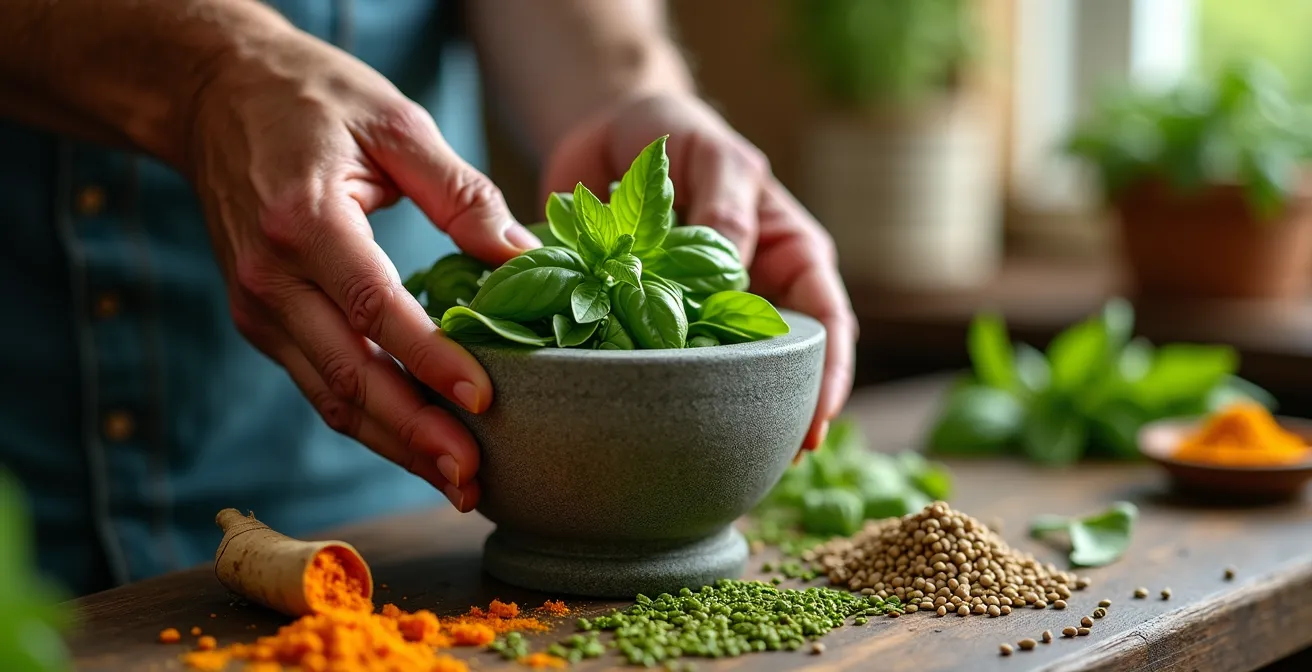
As shown here, working with fresh and whole spices can transform a meal from basic sustenance to a sensory experience. Encourage caregivers to experiment with warming spices like cinnamon and cumin in stews, bright herbs like dill and basil in soups, and robust aromatics like rosemary and thyme on roasted vegetables to make every meal an invitation to eat.
How to Fortify Your Soups Without Altering the Taste?
When a senior’s appetite is low, every bite counts. Nutrient fortification is the technique of increasing the protein and calorie content of food without significantly increasing the volume or changing the taste. This is a critical strategy for preventing malnutrition and muscle loss. Soups, stews, and smoothies are perfect vehicles for this because ingredients can be blended in, completely undetected.
The goal is to add nutrient-dense ingredients that are virtually tasteless and textureless once incorporated. Some of the most effective fortifiers include:
- Unflavored Whey or Collagen Protein Powder: A single scoop can add 20-25 grams of high-quality protein to a serving of soup or a smoothie.
- Powdered Milk: Stirring in a few tablespoons of non-fat dry milk into mashed potatoes, oatmeal, or creamy soups adds both protein and calcium.
- Healthy Fats: A swirl of olive oil, avocado oil, or a spoonful of smooth nut butter can add over 100 calories to a dish without affecting the primary flavor.
- Bean Purées: Puréed white beans (like cannellini) have a neutral flavor and creamy texture, making them a perfect, high-protein thickener for soups.
The science behind fortification, particularly with leucine-enriched protein, is compelling. It directly addresses the anabolic resistance seen in older adults by providing a powerful signal for muscle repair and growth.
Case Study: The Impact of Leucine-Enriched Protein
A study on pre-frail older adults provided compelling evidence for fortification. Participants receiving leucine-enriched protein combined with exercise showed significant improvements in physical function and muscle mass. The added protein worked by enhancing muscle protein synthesis through a specific cellular pathway known as mTORC1, demonstrating a direct biological benefit from targeted nutritional supplementation.
Why Inability to Open Jars Leads to a Diet of Processed Foods?
A seemingly minor issue like the inability to open a jar can have a major impact on a senior’s nutrition. When opening a simple jar of pasta sauce, pickles, or nut butter becomes a painful or impossible task due to arthritis, weakness, or loss of grip strength, frustration sets in. This single accessibility hurdle can steer a senior away from nutritious, whole-food ingredients and towards easy-to-open, but often less healthy, processed and packaged meals.
Providing the right tools is not a luxury; it’s a necessity for maintaining dietary independence and quality. As experts at HumanCare NY point out, “Providing accessible kitchen tools, like adaptive utensils or easy-to-use can openers, can reduce frustration during meal prep.” This simple act removes a significant barrier between a senior and a healthy, home-prepped meal.
Fortunately, there is a wide range of solutions available to fit any budget and level of need. The key is to assess the specific challenge and choose the right tool for the job. Equipping the kitchen with one or two of these items can make a world of difference.
- No-Cost Solutions: Start with simple tricks. Using rubber gloves for a better grip or running hot water over the lid for 30 seconds can often loosen a stubborn seal.
- Low-Cost Grippers ($5-15): Silicone grip pads and rubber jar grippers provide extra torque for a minimal investment. A “jar key” tool that pops the vacuum seal is also highly effective.
- Mounted Openers ($20-40): For persistent difficulty, an under-cabinet mounted jar opener allows the user to twist the jar with two hands while the opener holds the lid.
- Electric Openers ($50+): For individuals with severe arthritis or weakness, an automatic, battery-operated jar opener handles the entire task with the push of a button.
A proactive step is for the caregiver to transfer newly purchased items from difficult jars into easy-open, airtight containers immediately, eliminating the problem before it starts.
Key Takeaways
- Senior meal planning should be a flexible “food system,” not a rigid menu, focusing on easy-to-assemble components.
- Combating age-related muscle loss requires prioritizing high-protein, leucine-rich foods at every meal to overcome anabolic resistance.
- Leveraging frozen vegetables, nutrient fortification techniques, and aromatic spices are key strategies to make meals convenient, nutritious, and appetizing.
How to Meal Prep for a Low-Sodium Diet Without Losing Flavor?
Many seniors are on low-sodium diets for cardiovascular health, but this often leads to bland, uninspired meals that further depress an already low appetite. This vicious cycle can contribute to poor nutrition and even malnutrition, a condition that is estimated to affect approximately 15% of seniors receiving home care. The key to breaking this cycle is to proactively replace salt with bold, complex flavors from other sources.
Meal prepping for a low-sodium diet is all about building a library of salt-free seasoning blends. Instead of reaching for a generic “all-purpose” seasoning (which often contains salt), a caregiver can use a custom blend to transport a simple dish of chicken and vegetables to the Mediterranean, India, or Mexico. Having these blends pre-mixed and ready in shakers next to the stove makes flavorful cooking just as easy as using salt.
Creating these blends is simple. A caregiver can mix them in small batches and store them in airtight containers. This removes the decision-making from daily cooking and ensures every meal is packed with flavor, not sodium. Here are a few versatile blends to get started.
| Blend Name | Ingredients | Best Used For | Flavor Profile |
|---|---|---|---|
| Mediterranean Blend | Basil, oregano, thyme, rosemary, garlic powder | Pasta, chicken, vegetables | Herbaceous, aromatic |
| Smoky BBQ Blend | Smoked paprika, cumin, coriander, black pepper, onion powder | Meats, roasted vegetables | Smoky, slightly sweet |
| Indian-Spiced Blend | Turmeric, cumin, coriander, ginger, cinnamon | Lentils, rice dishes, soups | Warm, earthy, complex |
| Citrus Herb Blend | Lemon zest, dill, parsley, black pepper, garlic | Fish, salads, light soups | Bright, fresh, zesty |
By shifting from a rigid menu to a flexible, well-stocked food system, you empower a caregiver to consistently provide meals that are not only nutritionally sound but also delicious and appealing. This approach addresses the root causes of poor nutrition in seniors—muscle loss, low appetite, and physical barriers—creating a sustainable path to better health and well-being. The next logical step is to audit the current kitchen setup and start building your component-based pantry.