

The decision to renovate your home or relocate for your senior years is not just emotional; it’s a critical financial calculation of your property’s long-term viability.
- Renovation costs must be weighed against their ability to prevent a single, catastrophic event like a fall, which carries immense financial and health implications.
- Relocation involves high upfront transaction costs but can completely eliminate future accessibility risks and ongoing maintenance concerns.
Recommendation: Evaluate all home modifications based on their “risk-adjusted cost,” prioritizing high-impact, low-cost safety features before committing to major structural changes or a move.
For homeowners over 65, the question of whether to stay in a beloved family home or move to a more suitable environment is one of the most significant financial and lifestyle decisions they will face. The conversation is often dominated by emotional attachments and the comfort of the familiar. However, viewing this choice through a purely pragmatic, financial lens is essential for securing long-term stability and independence. The common advice is to simply weigh the pros and cons, but this often overlooks the most critical variable: the escalating cost of deferred decisions.
The true analysis isn’t about comparing today’s renovation bill to a realtor’s commission. It’s about future-proofing your assets against declining mobility. This involves a strategic assessment of your home not as it is now, but for its capacity to adapt to a potential worst-case scenario. Is your multi-story house a comfortable nest or a future financial liability when stairs become an obstacle? This article moves beyond the sentimental debate to provide a clear-eyed investment framework. We will dissect the financial tipping points, the hidden costs of inaction, and the strategic modifications that provide the highest return on both safety and property value.
This guide will walk you through a structured financial assessment, treating your home as both a health and a financial asset. We will examine specific high-value renovations, identify critical hazards, compare major mobility solutions, and provide a clear method for prioritizing modifications on a fixed budget. By the end, you will have a pragmatic roadmap to determine whether renovating or relocating is the superior financial strategy for your unique situation.
Summary: A Financial Framework for Aging in Place
- Why a Full Bathroom Remodel Adds Value While Increasing Safety?
- How to Identify Hidden Fall Hazards in Your Hallways in 10 Minutes?
- Bungalow Living or Installing a Stairlift: Which Offers Better Long-Term Mobility?
- The “I’ll Do It Later” Trap That Leads to Emergency Relocations
- How to Design a Doorway Today That Fits a Wheelchair Tomorrow?
- When to Replace Your Bathtub With a Walk-In Shower?
- Recovery Care or Nursing Home Coverage: Which Risk Should You Insure?
- How to Prioritize Home Modifications on a Fixed Pension Budget?
Why a Full Bathroom Remodel Adds Value While Increasing Safety?
The bathroom is statistically one of the most hazardous rooms in any home, but for seniors, it represents a concentration of risk factors: wet surfaces, hard fixtures, and the need to bend and balance. A full remodel should therefore be viewed not as a cosmetic upgrade, but as a critical investment in risk mitigation. The financial calculus is straightforward: the cost of a remodel is a single, planned expense, whereas the cost of a single fall can lead to recurring medical bills, the need for in-home care, or an emergency move to a facility, dwarfing the initial investment.
A strategic remodel focuses on “mobility-proofing” the space. Replacing a traditional tub with a zero-threshold, walk-in shower is the single most impactful change, directly eliminating the high-step motion that causes many falls. Installing professionally-anchored grab bars near the toilet and in the shower provides essential support points, turning a precarious movement into a secure one. Furthermore, raising the toilet height reduces strain on knees and hips, while single-lever faucets prevent scalding and are easier for arthritic hands to operate.
These modifications do more than just enhance safety; they add tangible, marketable value to your home. A universally designed bathroom is a significant selling point, appealing not only to other seniors but also to families with members of varying mobilities. It signals that the home is thoughtfully maintained and future-ready, justifying a higher valuation and making it a sound financial investment rather than a mere expenditure.
How to Identify Hidden Fall Hazards in Your Hallways in 10 Minutes?
While bathrooms are an obvious focal point, hallways are the arteries of a home where seemingly minor issues can create major fall risks. Given that two-thirds of senior falls occur in and around the house, conducting a quick audit of these transitional spaces is a high-return, no-cost activity. The primary culprits are often poor lighting, tripping hazards, and a lack of support.
The most overlooked hazard is inadequate or inconsistent lighting. As vision changes with age, the eyes adapt more slowly to shifts from light to dark, such as moving from a sunny room into a dimmer hallway. This can obscure obstacles like rug edges or slight changes in floor level. As the Pennsylvania Association of Realtors notes in their guide on home modifications:
A well-lit home can help prevent falls for seniors with impaired vision. Lighting should be plentiful and overhead, especially in well-traveled areas such as hallways.
– Pennsylvania Association of Realtors, 9 Home Modifications for Aging in Place
A simple 10-minute “walk-through” at different times of day can reveal these hidden dangers. Are there long shadows? Do you have to navigate around furniture? Are area rugs secured, or do their corners curl up? Removing clutter and throw rugs, and ensuring flooring transitions are flush, are immediate, low-cost fixes. Installing motion-sensor nightlights can dramatically improve safety during nighttime trips to the bathroom.
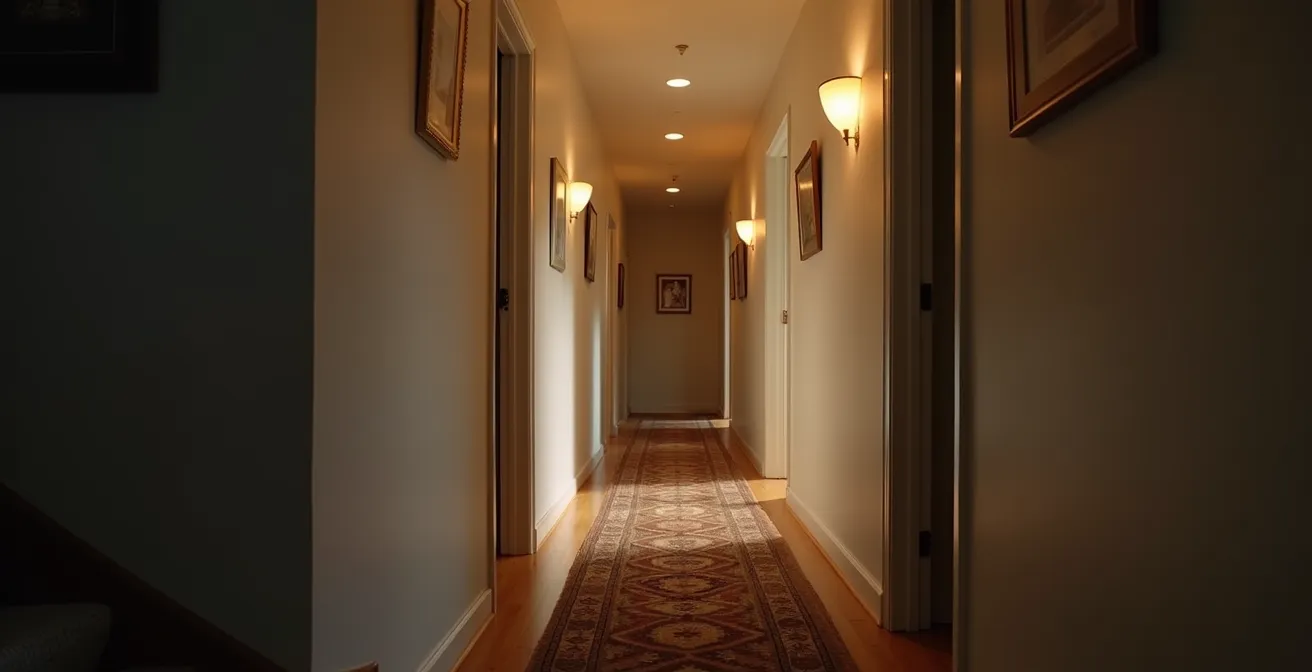
Finally, consider the walls themselves. Long hallways that lack any form of handrail force a person who feels unsteady to choose between touching the wall for balance or risking a fall. Installing a sturdy handrail along one side of a primary hallway is a moderate investment that provides continuous support, transforming a hazardous path into a secure walkway.
Bungalow Living or Installing a Stairlift: Which Offers Better Long-Term Mobility?
For owners of multi-story homes, the staircase often becomes the ultimate barrier to aging in place. This presents a stark financial choice: invest in a mechanical solution like a stairlift to preserve the current home, or relocate to a single-story property like a bungalow. While research shows 75% of adults over 50 want to age in place, the financial practicality of that desire must be rigorously examined.
A stairlift appears to be the simpler, less disruptive solution. However, its benefits are limited. It only solves the problem of the stairs themselves; the rest of the upper floor, including potentially narrow doorways or an inaccessible bathroom, may still present challenges. A stairlift is a targeted fix, not a comprehensive mobility solution. Conversely, moving to a bungalow offers complete single-level access, but at a significant upfront cost involving realtor fees, moving expenses, and potential price differentials. The following table breaks down the key financial and lifestyle considerations of each option.
| Factor | Stairlift Installation | Move to Bungalow |
|---|---|---|
| Initial Cost | $3,000-$6,000 (straight) $11,000-$20,000 (curved) |
10% selling costs + new home price differential |
| Maintenance | $150-$350 battery replacement every 3-5 years | Standard home maintenance only |
| Long-term Access | Limited to stairs only, rest of upper floor may remain inaccessible | Full home accessibility on single level |
| Community Factor | Stay in current neighborhood | Potential for more walkable community |
| Emotional Impact | Preserve memories and community ties | Fresh start but loss of familiar environment |
From a purely financial perspective, a stairlift is a depreciating asset that adds little to no resale value to your home. Moving, while costly, involves trading one real estate asset for another that may be better suited for long-term needs and potentially located in a more walkable community with better access to services. The decision hinges on whether the rest of your current home can be effectively “mobility-proofed” or if the stairs are just the first of many insurmountable barriers.
The “I’ll Do It Later” Trap That Leads to Emergency Relocations
One of the greatest financial risks in planning for aging in place is procrastination. The “I’ll do it later” mindset, often applied to necessary home modifications, transforms manageable, planned expenses into costly, crisis-driven decisions. An accident, such as a fall, can instantly remove the option to renovate, forcing a sudden and often permanent move into an assisted living facility—a far more expensive outcome than any planned modification.
This delay isn’t just a matter of putting off a project; it’s a gamble against time and health. Waiting until a mobility issue becomes acute means modifications are made under duress, often at a higher cost and with fewer options. Furthermore, attempting to save money with DIY solutions for critical safety features can backfire spectacularly. These projects require professional expertise to ensure they are structurally sound and meet safety standards.
Case Study: The High Cost of a DIY Mishap
The Lammers family provides a cautionary tale. Their attempt at a do-it-yourself handicap-accessible bathroom modification resulted in significant errors. The ultimate outcome was a $10,000 professional repair bill to fix the mistakes and complete the job correctly, highlighting the severe financial risks of delaying or improperly executing critical safety projects.
The antidote to this trap is proactive assessment and phased implementation. Don’t wait for a near-miss to take action. Regularly evaluate the home for emerging challenges. Acknowledging that a doorknob is becoming difficult to turn or that stepping over the tub rim feels less stable is the first step. By addressing these small issues early, you can prevent them from cascading into a major crisis. This approach treats home modification not as a single, overwhelming project, but as a series of manageable investments in your future independence.
How to Design a Doorway Today That Fits a Wheelchair Tomorrow?
Proactive home modification means designing for a future need, not just a current one. This concept of creating “accessibility headroom” is nowhere more critical than in doorways. While you may only need a walker today, a health event could necessitate a wheelchair tomorrow. Widening a doorway after the fact is a disruptive and costly construction project. Planning for it from the start is a simple, strategic investment.
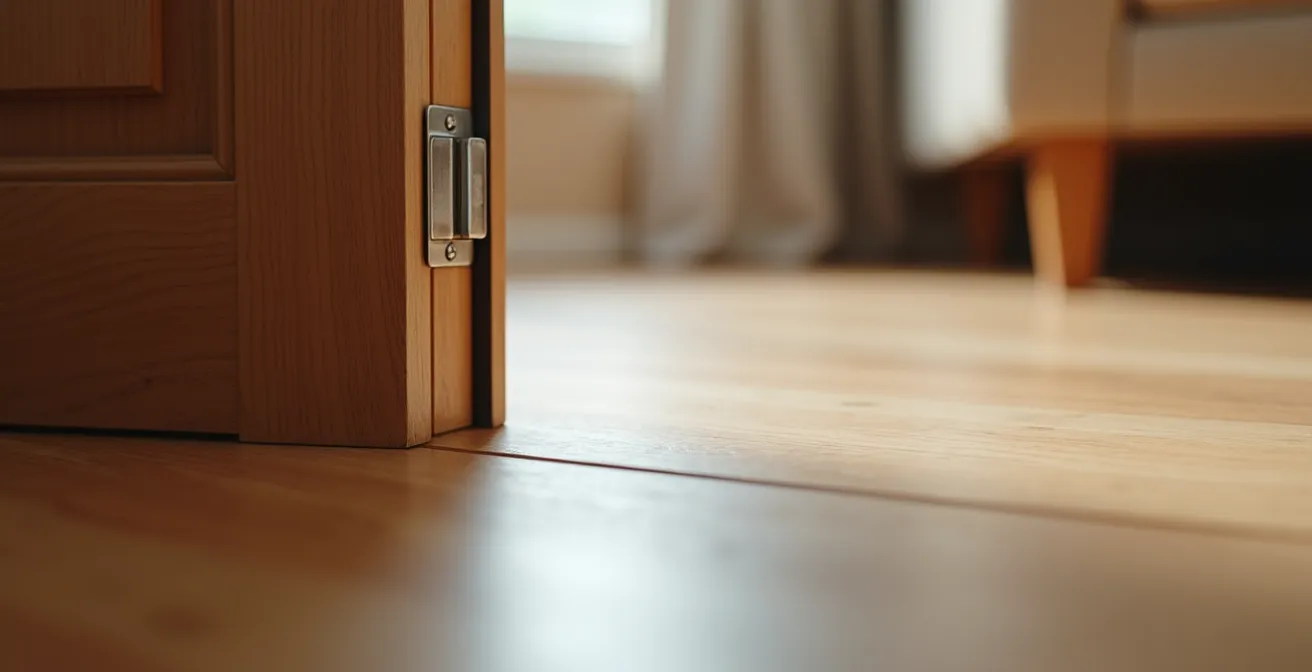
The key is to think beyond mere width. While ADA compliance standards indicate a 32-inch minimum clear width for wheelchair access, truly functional design considers the approach. A wheelchair user needs clear space on the “pull” side of the door to get out of the way of the swinging door. The ideal standard for new construction or major remodels is a 36-inch door, which provides ample clearance.
For existing doorways, there are less disruptive solutions than re-framing a wall. One of the most effective is installing offset or swing-clear hinges. These special hinges are designed to swing the door completely clear of the doorway, adding up to two crucial inches of clear space without any demolition. Another important consideration is the threshold. Even a small, half-inch lip can be a significant barrier for a wheelchair. Replacing a raised threshold with a zero-height, flush transition creates a seamless and safe passage between rooms.
By adopting this forward-thinking approach, you are not just widening a door; you are investing in uninterrupted access to your entire home, regardless of future mobility changes. It’s a one-time decision that prevents a far more significant problem down the line.
When to Replace Your Bathtub With a Walk-In Shower?
The decision to replace a traditional bathtub with a walk-in shower is a significant financial and safety milestone in aging in place. It’s often the point where minor aids are no longer sufficient, and a permanent structural change is required. The primary trigger for this decision should be any sign of instability, difficulty, or fear associated with stepping over the high wall of a bathtub. This single motion is a high-risk activity for a fall, and any hesitation is a clear signal that the risk now outweighs the tub’s utility.
From a financial standpoint, the investment is substantial; the typical cost for installing a walk-in shower ranges from $8,500 to over $20,000, depending on the complexity and materials. However, this cost must be compared to the alternatives. Temporary solutions like bath benches and transfer chairs have lower upfront costs but offer inferior safety and provide zero return on investment. A permanent walk-in shower, especially a curbless or zero-threshold design, is a capital improvement that increases home value and broadens its appeal to future buyers.
The table below provides a clear financial comparison between temporary aids and a permanent conversion, factoring in long-term value.
| Solution Type | Monthly Cost | Safety Rating | Long-term Value |
|---|---|---|---|
| Bath bench + grab bars | $50-100 rental | Moderate | No home value increase |
| Transfer chair system | $75-150 rental | Good | Temporary solution only |
| Walk-in shower conversion | $150-350 if financed | Excellent | Increases home value and appeal |
The financial “tipping point” is reached when the risk of a fall becomes a daily concern. At that moment, continuing to use a hazardous setup is no longer a viable option. Investing in a walk-in shower is not just paying for a new fixture; it’s buying down the risk of a life-altering and far more expensive medical event, making it one of the most prudent long-term investments in both health and home equity.
Recovery Care or Nursing Home Coverage: Which Risk Should You Insure?
The ultimate financial question in the “renovate or relocate” debate is a risk assessment: are you insuring against a temporary recovery period or a permanent need for care? The costs are vastly different. A comprehensive home modification project, while expensive, is typically a one-time cost. In contrast, relocating to an assisted living facility initiates an ongoing, and often escalating, monthly expense that can rapidly deplete a lifetime of savings.
According to data from ConsumerAffairs, a typical assisted living home costs around $50,000 per year. This is a recurring expense with no return on investment. A home modification project, on the other hand, with an average total cost between $25,000 and $50,000, can often be accomplished for the equivalent of just one year in a facility. As shown by the Genworth 2020 Cost of Care Survey, even in expensive areas, the one-time investment in modifications makes aging in place a significantly more cost-effective long-term strategy.
The decision, therefore, hinges on a realistic assessment of long-term care needs. If health conditions are likely to require specialized, 24/7 medical supervision that cannot be provided at home, then a facility is the necessary choice. However, if the primary challenges are mobility-related, investing in making your home safe and accessible acts as a form of insurance. It’s a capital investment that “pays out” by preventing the need for the far more costly alternative of facility-based care. By spending $40,000 on modifications, you are effectively avoiding a potential future liability of $50,000 every single year.
Key Takeaways
- The decision to renovate or relocate should be treated as a strategic financial investment, not an emotional choice.
- Proactive, small modifications are far more cost-effective than reactive, emergency-driven decisions following an accident.
- The most valuable modifications (walk-in showers, wider doorways) improve both immediate safety and long-term property value.
How to Prioritize Home Modifications on a Fixed Pension Budget?
For homeowners on a fixed income, the prospect of funding major home modifications can be daunting. The key is not to do everything at once, but to adopt a strategic, phased approach based on a clear hierarchy of risk and cost. The goal is to allocate limited funds to the changes that deliver the greatest impact on safety for the lowest initial outlay. This “risk-adjusted” budgeting ensures that every dollar spent is working to reduce the most immediate threats first.
Begin with high-impact, low-cost items. These are the quick wins that can dramatically reduce fall risk for a minimal investment. From there, move methodically up the cost ladder to more significant safety items, leaving major structural changes for last or for when dedicated funding is secured. This tiered approach makes the process manageable and financially sustainable. It’s also crucial to explore external funding sources. For instance, the HUD’s Older Adults Home Modification Program provides up to $5,000 in grants for eligible seniors, which can significantly offset the cost of a medium-sized project.
The following plan provides a clear framework for prioritizing modifications based on the principle of tackling the highest-impact and lowest-cost items first.
Action Plan: The Impact vs. Cost Prioritization Guide
- High Impact/Low Cost First: Immediately purchase and install non-slip bath mats ($20-30) and replace key incandescent bulbs with bright LED bulbs for better lighting ($5-15 each). These are the fastest, cheapest safety wins.
- Moderate Cost Safety Items: Next, schedule professional installation of grab bars in the bathroom ($85-300 installed) and replace critical round doorknobs with easier-to-use lever handles ($20-50 each).
- Medium Investment Phase: Once the basics are covered, invest in a raised toilet seat ($100-300) or a sturdy shower bench ($150-400) to reduce strain and improve stability in the bathroom.
- Major Modifications Last: Only after the above are complete, begin planning and saving for major projects like a walk-in shower conversion ($8,500-20,000) or a stairlift ($3,000-15,000), which require significant capital.
By following this disciplined, priority-based plan, you can systematically improve the safety of your home over time without overwhelming your budget. It transforms an intimidating, monolithic expense into a series of achievable steps toward long-term independence.
To make the most informed decision for your future, the next logical step is to seek a professional assessment of your home’s long-term financial and accessibility potential from a certified aging-in-place specialist.
Frequently Asked Questions About Funding Home Modifications
Does Medicare cover home modifications?
Original Medicare doesn’t cover home modifications, but some Medicare Advantage Plans offer extra benefits including walk-in showers and medical alert systems.
What government programs help with modifications?
The USDA provides grants and low-interest loans for eligible homeowners, and many states have Medicaid waivers designed to help seniors make homes safer.
Are there tax benefits for accessibility modifications?
Seniors may be able to deduct home modification expenses on state and federal tax returns, particularly for medical necessity modifications.