
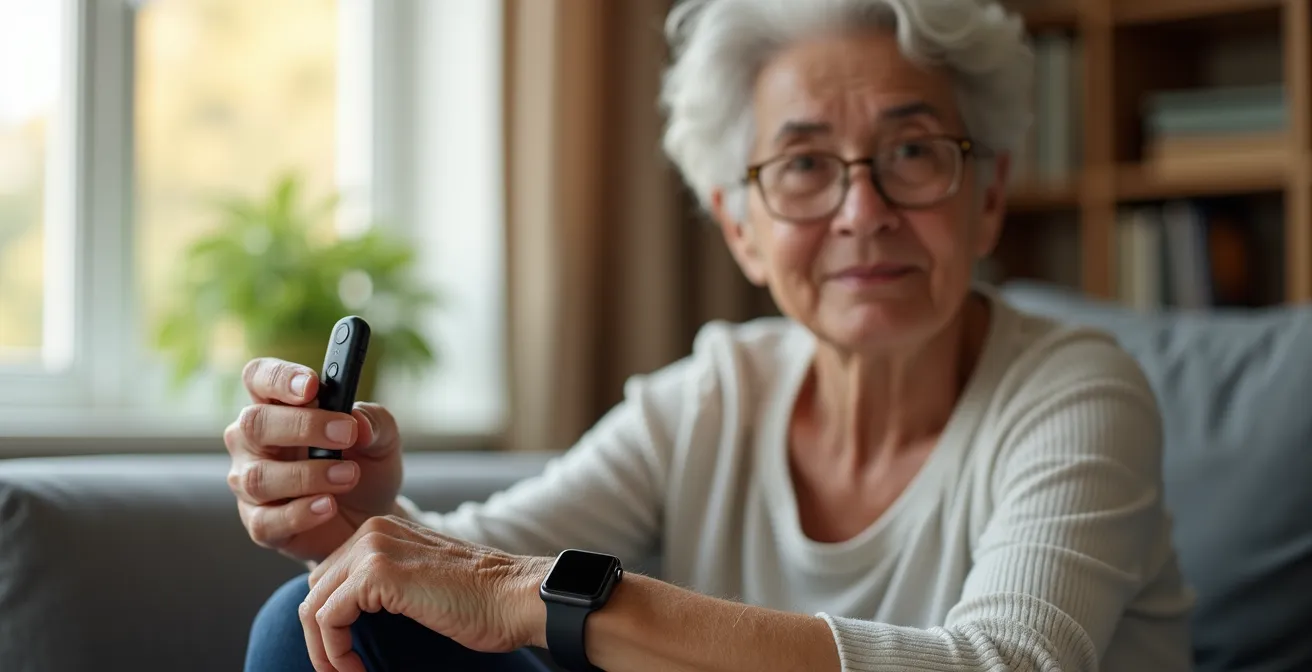
The best device for detecting irregular heartbeats depends on the type of data you need: continuous background monitoring for unknown issues or on-demand medical-grade data for known symptoms.
- Smartwatches with Photoplethysmography (PPG) excel at detecting asymptomatic events by passively monitoring your heart rate 24/7.
- Devices with on-demand Electrocardiogram (ECG) provide symptomatic, clinical-grade data that is highly valuable to a cardiologist.
Recommendation: Evaluate if your primary goal is proactive discovery (smartwatch) or reactive, evidence-based monitoring (ECG-capable device or medical alert), and use this guide to understand the underlying technology before you choose.
For tech-savvy seniors and their families, the promise of technology to proactively monitor health is more compelling than ever. When it comes to cardiac health, a critical question emerges: which is better for detecting an irregular heartbeat, a feature-rich smartwatch or a dedicated medical alert system? The common advice often frames this as a simple lifestyle choice—an active, younger senior gets the watch, while a more frail individual gets the alert pendant. This perspective, however, misses the most crucial point.
The decision is not merely about activity levels or aesthetics. It’s a strategic choice about the very nature of the data being collected. The fundamental difference lies in the underlying technology: the continuous, passive background scanning of a smartwatch’s optical sensor versus the on-demand, high-fidelity capture of a medical-grade ECG or the immediate response of an alert system. One is designed for discovery of the unknown, the other for confirmation of the felt or immediate reaction to a crisis.
But what if the key isn’t choosing one *over* the other, but understanding which technology serves which specific purpose? This article moves beyond the surface-level debate. We will dissect the technology—from PPG to ECG and landlines to GPS—to provide a clear framework. By understanding the “why” and “how” behind each device’s monitoring capabilities, you can make an informed decision that truly aligns with your personal health strategy and provides data with real clinical utility.
This guide offers a technical, comparison-oriented breakdown to help you navigate this complex landscape. Explore the different facets of at-home health monitoring to understand which system, or combination of systems, offers the best protection and insight for your specific needs.
Summary: An In-Depth Comparison of Heartbeat Detection Technologies
- Why High Blood Pressure Is Called the “Silent Killer” for Seniors?
- How to Ensure Your Wearable Device Gives Accurate Readings?
- Wearables or Bed Sensors: What Is Best for Sleep Apnea Detection?
- The Anxiety Error: Checking Your Vitals Too Often
- How to Export Apple Health Data to Show Your Cardiologist?
- Flash Scanning or Bluetooth Streaming: Which System Suits Your Lifestyle?
- Traditional Landline or Cellular GPS: Which Is Safer for Active Seniors?
- How to Measure Blood Pressure at Home for Clinical Accuracy?
Why High Blood Pressure Is Called the “Silent Killer” for Seniors?
Understanding the need for proactive monitoring begins with recognizing the nature of cardiovascular threats. High blood pressure, or hypertension, is a prime example. It’s dubbed the “silent killer” for a stark reason: it typically presents with no noticeable symptoms. A person can feel perfectly fine while their vascular system is under dangerous strain, increasing the risk of heart attack, stroke, and other life-threatening events. The scale of this issue is immense; according to the latest CDC data, 69.1% of US adults aged 60 and older have hypertension.
This silent nature makes self-awareness or reliance on symptoms an ineffective strategy for management. As the World Health Organization notes, a person’s blood pressure must be dangerously high before it causes overt symptoms. This is why regular, objective measurement is non-negotiable for this age group.
Most people with hypertension don’t feel any symptoms. Very high blood pressures can cause headaches, blurred vision, chest pain and other symptoms.
– World Health Organization, WHO Hypertension Fact Sheet
The principle of the “silent killer” extends to other cardiac conditions like atrial fibrillation (AFib). Many episodes are asymptomatic, meaning they occur without the person ever feeling a flutter or palpitation. This is precisely where technology like a smartwatch with passive monitoring can provide immense value, by detecting anomalies that would otherwise go completely unnoticed until a more serious complication arises. The goal is to make the invisible, visible.
How to Ensure Your Wearable Device Gives Accurate Readings?
A monitoring device is only as good as the data it produces. Whether it’s a smartwatch, a blood pressure cuff, or a digital thermometer, ensuring its accuracy is paramount for making sound health decisions. The technology behind these devices, especially the optical heart rate sensors on smartwatches, is incredibly sophisticated. These sensors use a method called photoplethysmography (PPG), flashing green LED lights hundreds of times per second to detect the volume of blood flowing through your wrist.
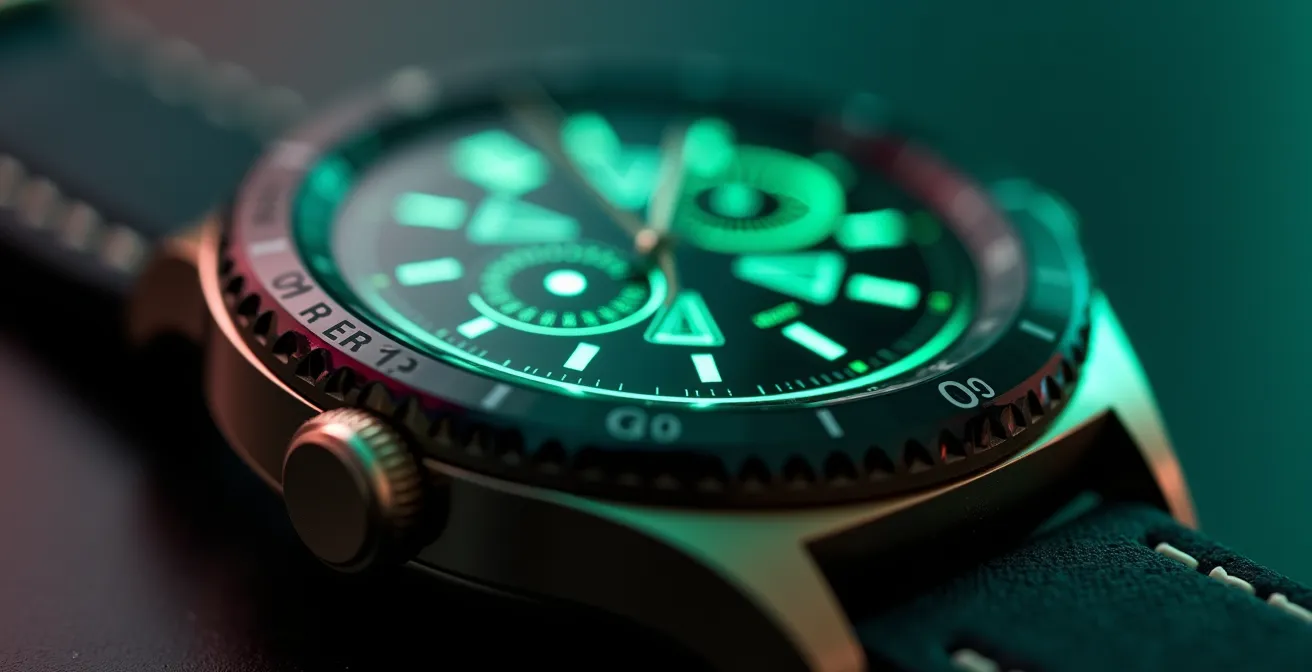
As this image of a sensor array shows, these are precision instruments. However, their accuracy can be influenced by factors like skin tone, device fit, and motion. Therefore, “calibrating” your trust in the device involves a series of verification steps. It’s not about physically adjusting the device, but about establishing a reliable baseline and understanding its limitations. This process ensures you can trust the trends it reveals and know when a reading warrants a follow-up with a clinical-grade measurement.
Action plan: Verify your wearable’s accuracy
- Regulatory Check: Before anything else, confirm your device has regulatory clearance for its health features (e.g., FDA clearance in the United States). This is a baseline indicator of quality and testing.
- Establish a Personal Baseline: Compare your device’s readings with measurements taken in a clinical setting (e.g., at your doctor’s office) to understand its typical variance.
- Know the Margin of Error: Consult the manufacturer’s specifications to find the device’s stated margin of error. This helps you interpret fluctuations and avoid overreacting to minor changes.
- Monitor for Inconsistencies: Pay attention to consistently unusual readings, especially after a software update, which can sometimes introduce bugs. A sudden shift in your baseline data warrants investigation.
- Inspect for Physical Damage: Periodically check the sensor on the underside of your device. Scratches or cracks can impair its function and lead to inaccurate readings, indicating a need for service or replacement.
Wearables or Bed Sensors: What Is Best for Sleep Apnea Detection?
Irregular heartbeats don’t just happen during the day. For many, the most dangerous cardiovascular events occur during sleep, often linked to conditions like sleep apnea. This is a disorder where breathing repeatedly stops and starts, causing oxygen levels to drop and putting significant stress on the heart. The link is so strong that an estimated 50% of people with AFib also have sleep apnea. Detecting these nighttime events is therefore a critical part of a comprehensive cardiac monitoring strategy.
This has led to two main categories of consumer-grade sleep monitoring technology: wearables (like smartwatches and rings) and under-mattress bed sensors. Each approach has distinct advantages and disadvantages when it comes to detecting signs of sleep apnea and related cardiac irregularities. Wearables offer an all-in-one data ecosystem, tracking heart rate, SpO2 (blood oxygen), and sleep stages directly from your body. Bed sensors, on the other hand, are a “set and forget” solution that excels at tracking movement and respiratory patterns without requiring you to wear anything.
| Feature | Wearable Devices | Bed Sensors |
|---|---|---|
| Data Integration | All-in-one ecosystem (SpO2, heart rate, sleep stages) | Separate data silo, focused on movement |
| Accuracy | Good for heart metrics, moderate for sleep stages | Excellent for movement and breathing patterns |
| Convenience | Must wear nightly, battery concerns | Set and forget, no wearing required |
| AFib Detection | Can detect irregular heartbeats during sleep | Limited cardiac monitoring capabilities |
From a purely cardiac-focused perspective, wearables hold a distinct advantage. While bed sensors are excellent for detecting the restlessness and breathing disruptions characteristic of sleep apnea, they generally lack the sophisticated heart rate sensors needed to identify an underlying AFib episode. A smartwatch can do both: infer sleep disturbances and directly detect an irregular rhythm, making it a more powerful tool for a user whose primary concern is heart health.
The Anxiety Error: Checking Your Vitals Too Often
The ability to access a constant stream of personal health data is a double-edged sword. While it empowers proactive monitoring, it can also fuel a cycle of health anxiety, a phenomenon sometimes called “cyberchondria.” The temptation to check your heart rate after every little twinge or constantly monitor your blood oxygen can lead to an obsession with normal bodily fluctuations. This hyper-vigilance can, ironically, create stress that negatively impacts the very vitals you’re monitoring. The goal of at-home monitoring is informed peace of mind, not data-driven panic.
Finding a healthy balance is key. This means moving away from random, fear-based checks and establishing a structured, intentional monitoring routine. A healthy framework focuses on identifying long-term trends rather than reacting to single, isolated readings. It’s about using data as a tool for a periodic, calm assessment, not as a real-time panic button. This might even involve taking planned “data fasts”—days where you intentionally don’t check your vitals—to break the cycle of obsessive checking.

A healthier relationship with your data involves a structured approach. Instead of reactive checking, implement a schedule. For example:
- Schedule consistent check times, such as once each morning in a relaxed state.
- Avoid random, anxiety-driven checks throughout the day.
- Keep a simple log to identify patterns and trends over weeks, not minutes.
- Focus on your weekly or monthly average resting heart rate rather than a single high reading after climbing stairs.
By treating data collection as a scheduled, periodic task rather than a constant feedback loop, you regain control and reduce the anxiety that can corrupt both the data and your quality of life.
How to Export Apple Health Data to Show Your Cardiologist?
The ultimate goal of collecting health data is for it to be clinically useful. A notification of an “irregular heartbeat” is a starting point, but a cardiologist needs more than an alert; they need evidence. This is where the capability of certain smartwatches to generate and export a medical-grade Electrocardiogram (ECG or EKG) becomes a game-changer. An ECG provides a detailed view of the heart’s electrical activity, allowing a doctor to diagnose specific types of arrhythmias like AFib with a high degree of confidence.
As experts in the field confirm, this feature transforms a consumer gadget into a valuable medical tool, especially for those who experience intermittent symptoms. As noted by Dr. Christopher P. Cannon in the Harvard Heart Letter, a publication from Harvard Medical School:
The ECG feature found on many smart watches can help people with atrial fibrillation (afib) monitor their condition. The ECG feature may also be useful for people who experience occasional, brief palpitations.
– Dr. Christopher P. Cannon, Harvard Heart Letter
However, simply having the data is not enough. You must present it to your doctor in a usable format. For Apple Watch users, the Health app allows you to export your recorded ECGs as a PDF. To maximize its utility, this data should be annotated with your own experiences. A simple PDF is good; a PDF with notes about what you were feeling at the time of the reading is far better. This contextual information helps your cardiologist connect the electrical data to your real-world symptoms.
To prepare this data effectively, follow a clear process:
- Export Data: From the Apple Health app, find the ECG reading and use the “Export PDF for Your Doctor” option.
- Annotate the PDF: Use a PDF editor or print the document and write on it. Note the date, time, and any symptoms you felt (e.g., “felt dizzy,” “heart was racing,” “short of breath”).
- Highlight Key Metrics: If available, point out trends in Heart Rate Variability (HRV) or the AFib Burden percentage.
- Link Symptoms to Readings: Create a separate, simple log that connects your subjective feelings to specific, timed readings in your export. This creates a powerful narrative for your doctor.
Flash Scanning or Bluetooth Streaming: Which System Suits Your Lifestyle?
At the heart of the smartwatch vs. medical alert debate is a critical technological distinction: on-demand versus continuous monitoring. This is the difference between “flash scanning,” where you actively initiate a reading (like taking an ECG), and “Bluetooth streaming,” where the device passively collects data in the background (like continuous PPG heart rate tracking). This isn’t just a technical detail; it defines the core purpose of the device and determines who it’s best for.
Flash Scanning (On-demand ECG): This method is ideal for the symptomatic user. If you feel a palpitation, dizziness, or shortness of breath, you can immediately place your finger on the device’s sensor to capture a high-fidelity, medical-grade ECG at the exact moment of the event. Its primary advantage is accuracy; the data is clean and clinically actionable. Its limitation is that it’s useless for detecting asymptomatic AFib—if you don’t feel it, you can’t record it.
Bluetooth Streaming (Continuous PPG): This is the default mode for most smartwatches. The optical sensor continuously monitors your heart rate and rhythm, streaming this data to the device’s processor. Its greatest strength is the ability to detect asymptomatic events, catching silent AFib episodes you would otherwise never know about. However, this method is more prone to false positives from motion artifacts and has a higher battery drain.
| Monitoring Type | Best For | Advantages | Limitations |
|---|---|---|---|
| Flash Scanning (On-demand ECG) | Symptomatic users who can trigger during events | Medical-grade accuracy when activated | Misses asymptomatic events entirely |
| Bluetooth Streaming (Continuous PPG) | Detecting asymptomatic AFib | 24/7 monitoring, catches silent events | Higher battery drain, more false positives |
The choice is a strategic trade-off. Do you want the highest possible accuracy during a known event, or do you want a 24/7 safety net to catch the unknown? Many modern smartwatches, like the Apple Watch, offer both: continuous PPG as the default and an on-demand ECG app for symptomatic moments, providing a powerful hybrid solution.
Traditional Landline or Cellular GPS: Which Is Safer for Active Seniors?
While smartwatches focus on proactive data collection, traditional Personal Emergency Response Systems (PERS), or medical alerts, are built for one primary purpose: reactive safety. Their core function is not to gather granular health data but to establish a fast, reliable connection to help during an emergency, such as a fall, a cardiac event, or any other crisis. Within this category, the main technological divide is between systems that rely on a traditional home landline and those that use a cellular network with GPS.
A landline-based system is tethered to the home. It consists of a base station plugged into a phone jack and a wearable button with a limited range (typically a few hundred feet). Its main vulnerability is its dependence on a physical line that can be cut or disabled during a power outage. A cellular system, on the other hand, operates anywhere there is a cell signal. These devices, which can be pendants or watches, have built-in GPS, allowing emergency services to pinpoint your location whether you’re at home, at the grocery store, or on a walk.
| System Type | Coverage Area | Vulnerabilities | Best Use Case |
|---|---|---|---|
| Traditional Landline | Home only | Power outages, line cuts | Homebodies with reliable power |
| Cellular GPS | Anywhere with cell coverage | Battery death, coverage gaps | Active seniors, outdoor enthusiasts |
For an active senior, a cellular GPS system offers unequivocally greater safety and freedom. The ability to call for help and be located outside the home is a critical feature that landline systems simply cannot provide. While they are dependent on battery life and cell coverage, the flexibility they afford is a massive advantage. Some modern systems even offer a hybrid approach, with a home base station and a mobile unit for maximum redundancy.
Key Takeaways
- The fundamental choice is not lifestyle but technology: on-demand ECG for symptomatic evidence versus continuous PPG for asymptomatic discovery.
- Smartwatches with PPG are superior for detecting unknown, silent heart conditions like AFib through 24/7 background monitoring.
- The ability to generate and export a medical-grade ECG makes a device’s data clinically actionable and highly valuable to a cardiologist.
How to Measure Blood Pressure at Home for Clinical Accuracy?
Alongside irregular heartbeats, managing blood pressure is a cornerstone of cardiovascular health for seniors. Just like with heart rate monitoring, the value of at-home blood pressure data is directly tied to its accuracy. A single incorrect reading can cause unnecessary alarm or, worse, false reassurance. To ensure your home measurements are reliable enough to be shared with your doctor, it’s essential to follow a protocol that mimics a clinical setting as closely as possible.
Achieving clinical accuracy at home is less about the device itself—assuming you have a validated monitor—and more about preparation and procedure. Factors like stress, physical activity, a full bladder, or even your posture can significantly skew a reading. According to the CDC’s best practices, controlling these variables is crucial. For instance, simply having a full bladder can artificially increase your systolic pressure by 10-15 mmHg, potentially moving you from a “normal” to a “hypertensive” category on a single reading.
To get the most accurate and consistent data, follow this standardized measurement protocol:
- Rest quietly for at least 5 minutes before taking a measurement.
- Sit in a chair with your back supported, your feet flat on the floor, and your legs uncrossed.
- Support your arm on a table or armrest so the cuff is at the same level as your heart.
- Ensure you have emptied your bladder before the measurement.
- Avoid caffeine, exercise, and smoking for at least 30 minutes prior to your reading.
- As recommended by a protocol from the Centers for Disease Control and Prevention, take 2-3 readings one minute apart and average the results.
- Measure at the same time each day (e.g., every morning) to establish a consistent trend.
By adopting this disciplined approach, you transform your at-home readings from random data points into a reliable dataset that can genuinely inform your healthcare decisions.
To make the best decision for your health, the next logical step is to discuss these technological differences—proactive data gathering versus reactive safety—with your healthcare provider to create a personalized monitoring strategy.
Frequently Asked Questions about How to Measure Blood Pressure at Home for Clinical Accuracy?
What does ‘IHB’ icon mean on my monitor?
IHB stands for Irregular Heartbeat. The device detected a possible irregular heartbeat during measurement. While this is not a diagnosis, you should save this reading and show it to your doctor for further evaluation.
What causes an ‘Error 3’ or movement error?
This error typically means you moved your body or arm during the measurement, or the cuff was not positioned properly. To fix this, ensure you are completely still, with your arm supported at heart level, and the cuff is snug but not too tight before trying again.
Why does my monitor show ‘Error’ with very high or low readings?
An ‘Error’ message can appear if the measured reading falls outside the device’s operational measurement range (either extremely high or low). If such a reading is accompanied by symptoms like dizziness, chest pain, or severe headache, you should seek immediate medical attention.