
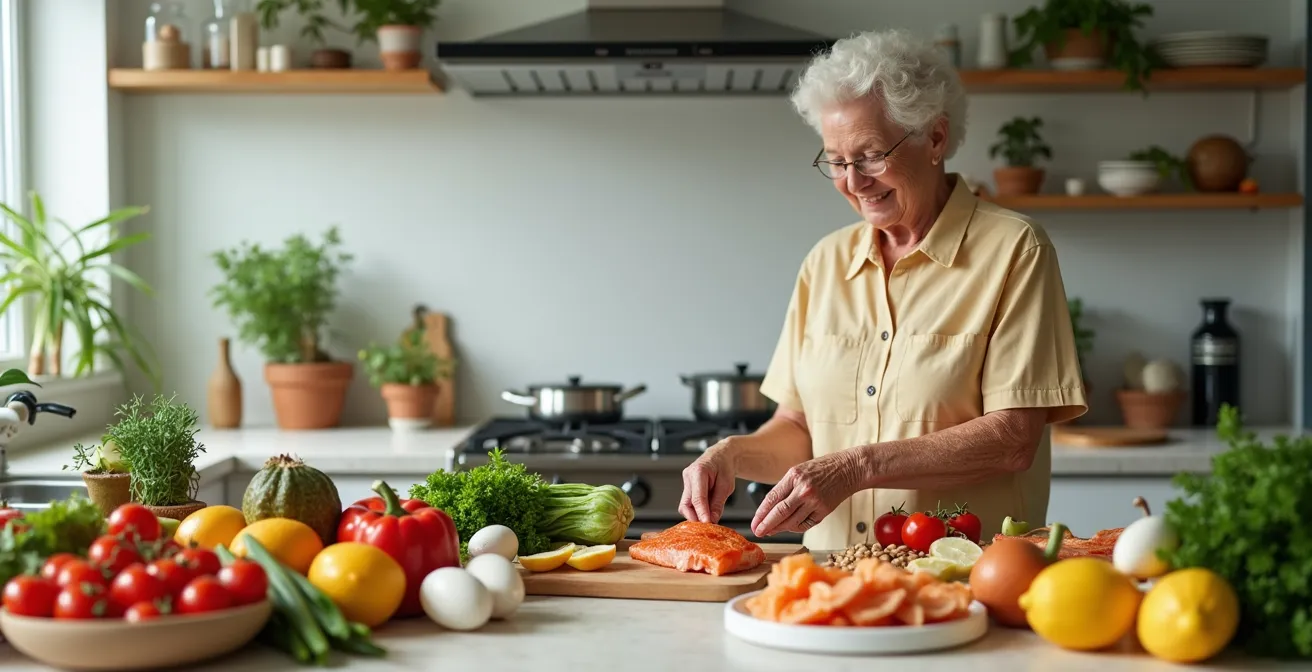
The key to vitality after 70 is not eating less, but mastering “Nutrient Efficiency”—making every calorie a strategic investment in your health.
- Your metabolism slows, requiring fewer calories, but your body’s ability to absorb and use nutrients like protein and vitamins diminishes, demanding a higher intake.
- Simple dietary shifts, like prioritizing protein at breakfast and adding healthy fats to salads, can dramatically improve muscle maintenance and nutrient absorption.
Recommendation: Focus on fortifying familiar meals with nutrient-dense ingredients rather than overhauling your entire diet.
It’s one of the most common and confusing paradoxes of aging. You notice your appetite might be smaller or that maintaining your weight requires less food than it used to. Yet, you hear that your need for certain nutrients, like protein and vitamins, is actually going up. This isn’t your imagination; it’s a fundamental shift in your body’s biology known as the metabolic paradox of aging. Many seniors, noticing these changes in weight or a dip in energy, are left confused about what to eat. The common advice to simply “eat a balanced diet” feels inadequate when the rules of the game have clearly changed.
The standard solutions often miss the point. You might be told to eat more fruits and vegetables, which is sound advice, but it doesn’t address the core issue of muscle loss (sarcopenia) or weakening bones (osteoporosis). The real challenge isn’t just about what you eat, but how your body can use it. After 70, a phenomenon called “anabolic resistance” sets in, meaning your muscles need a much stronger signal—more protein—to maintain themselves. At the same time, changes in your digestive system can make it harder to absorb essential fat-soluble vitamins and minerals.
But what if the solution wasn’t a complete dietary overhaul, but a series of smart, strategic adjustments? What if the key to thriving wasn’t just in the foods you choose, but in the timing, combinations, and preparation? This is the principle of Nutrient Efficiency: maximizing the health-promoting power of every single calorie you consume. It’s about working with your body’s new reality, not against it. This guide moves beyond generic advice to give you the scientific and food-loving strategies of a geriatric dietitian.
In the following sections, we will explore practical, evidence-based ways to navigate this metabolic paradox. We’ll uncover how to transform your meals to fight muscle loss, ensure your medications work effectively, and boost flavor without relying on harmful additives. Get ready to make every bite count.
Summary: Mastering Nutrient Efficiency After 70
- Why Your Breakfast Toast Is Contributing to Sarcopenia?
- How to Fortify Your Soups Without Altering the Taste?
- Whey Protein or Pea Protein: Which Is Easier for Seniors to Digest?
- The “Low Fat” Mistake That Impairs Vitamin Absorption in Seniors
- When to Eat Dairy to Avoid Blocking Antibiotic Effectiveness?
- The Sedentary Mistake That Leads to Rapid Muscle Loss in Winter
- Supplements or Sunshine: Which Is More Effective for Bone Density?
- How to Meal Prep for a Low-Sodium Diet Without Losing Flavor?
Why Your Breakfast Toast Is Contributing to Sarcopenia?
For many, a morning ritual of toast and coffee feels comforting and simple. However, from a muscle health perspective, this carbohydrate-heavy start to the day is a missed opportunity that can inadvertently contribute to sarcopenia, the age-related loss of muscle mass and strength. The underlying issue is a concept known as anabolic resistance. As we age, our muscles become less responsive to the stimuli that trigger growth and repair. This means we need a larger dose of protein, particularly at one time, to kickstart muscle protein synthesis effectively. A simple piece of toast provides energy but virtually none of the essential building blocks your muscles are craving after an overnight fast.
During the night, your body is in a catabolic (breakdown) state. To reverse this and switch to an anabolic (building) state, you need to consume a significant amount of protein, ideally hitting the “leucine threshold.” Leucine is an amino acid that acts as a primary trigger for muscle building. Most experts agree that a meal containing 25-30 grams of protein is needed to maximize this effect in older adults. Your breakfast toast with jam might only contain 2-4 grams, leaving your muscles in a deficit. In fact, comprehensive research shows older adults need between 1.0 to 1.2 grams of protein per kilogram of body weight daily, significantly more than the standard recommendation for younger adults.
The solution isn’t to abandon your breakfast routine but to upgrade it. Think of it as an fortification. Instead of plain toast, consider a slice of whole-grain toast topped with two scrambled eggs and a side of Greek yogurt. This simple swap can easily push your protein intake into the optimal zone. By front-loading your protein intake at the first meal of the day, you give your body the tools it needs to halt muscle breakdown and spend the rest of the day preserving, and even building, lean mass. This single change can be one of the most powerful strategies in maintaining your strength, mobility, and independence.
How to Fortify Your Soups Without Altering the Taste?
Soup is a beloved comfort food for a reason: it’s warm, easy to consume, and hydrating. However, many traditional broth-based soups are low in calories and, more importantly, protein. This presents a perfect opportunity for strategic fortification—the art of boosting the nutritional value of a meal without changing its fundamental flavor or texture. For seniors who may have a reduced appetite, making every spoonful nutritionally dense is a cornerstone of maintaining health and muscle mass. The goal is to weave in high-quality protein and calories invisibly.
There are several tasteless or neutral-flavored ingredients that work wonderfully for this purpose. Unflavored collagen or whey protein isolate powders can be stirred into hot liquids until they dissolve completely. Pureed white beans or silken tofu can be blended into creamy soups like tomato or butternut squash, adding a velvety texture along with plant-based protein and fiber. For a boost in healthy fats and B vitamins, nutritional yeast can impart a mild, cheesy-savory flavor, while a drizzle of MCT oil can add calories that are easily converted into energy. The visual below demonstrates just how seamlessly these additions can be integrated.

As you can see, blending a creamy, protein-rich ingredient like a bean puree into a vibrant soup base creates a richer final product without any sign of a “healthy” addition. This technique is not just theoretical; it’s used in professional settings to improve senior nutrition.
Case Study: Nutrient Stacking in Senior Meal Programs
The NYC Department for the Aging developed a powerful real-world example of this strategy. Through cooking demonstrations, they showed seniors and caregivers how to add ingredients like unflavored collagen peptides, nutritional yeast, and MCT oil to everyday soups. The result was transformative: meals that contained 40% more protein and an enhanced B-vitamin content, all without altering the familiar and beloved taste profiles of the original recipes. This proves that significant nutritional gains are possible without sacrificing the enjoyment of food.
Whey Protein or Pea Protein: Which Is Easier for Seniors to Digest?
Protein powders have become a popular and convenient tool for helping seniors meet their elevated protein needs. However, the burgeoning market can be confusing, with the two most dominant players being whey (derived from dairy) and pea (a plant-based alternative). When choosing for a senior, the decision goes beyond simple preference; it involves two critical factors: digestibility and bioavailability. The best protein is not just the one you consume, but the one your body can efficiently break down and use to repair and build tissue.
The scientific standard for measuring protein quality is the Protein Digestibility-Corrected Amino Acid Score (PDCAAS), which rates a protein on a scale from 0 to 1 based on its amino acid profile and how easily it is digested by humans. In this regard, whey protein has long been considered the gold standard. Multiple studies show that whey protein scores a perfect 1.0 on the PDCAAS scale. This means it provides all essential amino acids in a form that the body can absorb almost completely. It is also rich in leucine, the key amino acid for triggering muscle synthesis.
Pea protein, however, has emerged as a very strong contender, especially for those with dairy sensitivities or who prefer a plant-based diet. Its PDCAAS score is slightly lower, typically ranging from 0.82 to 0.93, but this is still considered a high-quality protein. While it is lower in one amino acid (methionine), it is rich in others, including arginine. For most seniors, both can be excellent choices. The decision often comes down to individual tolerance. Whey concentrate can sometimes cause bloating or gas in those with lactose intolerance; in these cases, a whey isolate (which has most of the lactose removed) or a high-quality pea protein would be a superior choice. Ultimately, the best protein powder is the one that is well-tolerated and can be consumed consistently.
The “Low Fat” Mistake That Impairs Vitamin Absorption in Seniors
For decades, dietary fat was villainized, leading to a widespread “low-fat” craze that has had lasting, and often detrimental, consequences. For seniors, this mindset can be particularly harmful because it overlooks a crucial function of fat: it is essential for the absorption of fat-soluble vitamins A, D, E, and K. These vitamins play vital roles in vision, immune function, bone health, and blood clotting. When you consume a salad with a fat-free dressing or steam vegetables without adding a source of fat, you are effectively preventing your body from accessing these critical nutrients, no matter how colorful your plate is.
This issue is compounded by the fact that the need for some of these vitamins increases with age. Vitamin D is a prime example. It is indispensable for calcium absorption and bone density, yet our skin becomes less efficient at producing it from sunlight as we get older. Consequently, dietary intake and supplementation become much more important. Official guidelines reflect this, showing that while younger adults need 600 IU (International Units) per day, vitamin D needs increase to 800 IU per day after age 70. Consuming a Vitamin D supplement or a fortified food without a source of dietary fat is like having a key to a door but no way to turn it.
The solution is to embrace healthy fats as partners to your nutrient-rich foods. This doesn’t mean turning to saturated or trans fats. Instead, focus on incorporating monounsaturated and polyunsaturated fats into your meals. Imagine a vibrant salad packed with dark leafy greens (Vitamin K), bell peppers (Vitamin A), and carrots (beta-carotene, a precursor to Vitamin A). To unlock these nutrients, you must pair them with fat.
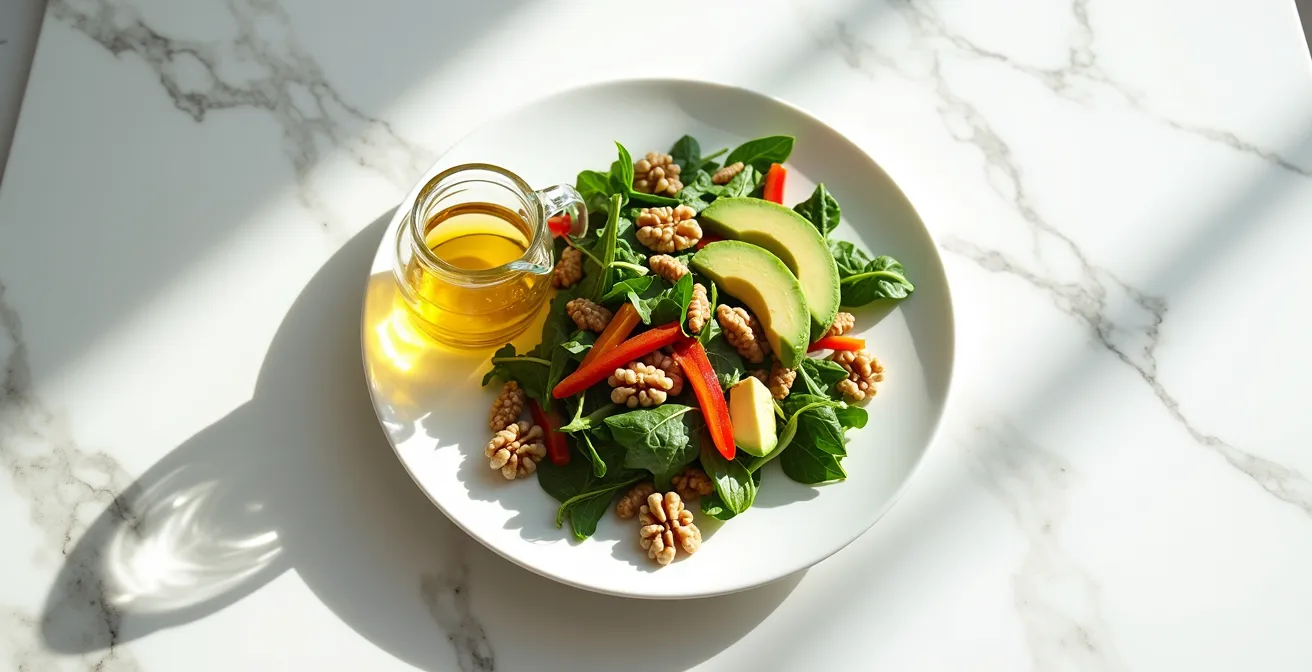
A drizzle of olive oil, a few slices of avocado, or a sprinkle of walnuts or almonds can make all the difference. This simple addition transforms your meal from a collection of potential nutrients into a bioavailable feast that your body can actually use. It’s a perfect illustration of nutrient efficiency—a small change that yields a massive return on your health investment.
When to Eat Dairy to Avoid Blocking Antibiotic Effectiveness?
As a geriatric dietitian, one of the most critical areas of focus is the interaction between food and medication. For seniors, who often manage multiple prescriptions, understanding these interactions is not just beneficial—it’s essential for safety and treatment efficacy. One of the most common and significant interactions involves calcium-rich foods, like dairy products, and certain medications, particularly antibiotics. Calcium can bind to some drugs in the stomach and small intestine, forming an insoluble compound that the body cannot absorb. This effectively reduces the dose of the medication you receive, potentially rendering it ineffective against an infection.
The primary culprits are antibiotics in the tetracycline and fluoroquinolone families (like Ciprofloxacin). However, the issue extends beyond antibiotics. Calcium also interferes with the absorption of bisphosphonates used for osteoporosis (e.g., Alendronate) and thyroid medications like levothyroxine. This interaction isn’t limited to milk, cheese, and yogurt. It also applies to calcium-fortified orange juice, calcium-fortified plant milks (like almond or soy), and calcium supplements. The key is not to eliminate these important foods, but to time them correctly.
The generally accepted guideline is the “2-hour rule”: you should take the affected medication at least 2 hours before or 2 hours after consuming any significant source of calcium. For some drugs, like thyroid medication, an even wider window of 4 hours is recommended for optimal absorption. The following table provides a clear guide to some common interactions.
| Medication Type | Examples | Timing Rule | Foods to Avoid |
|---|---|---|---|
| Antibiotics | Tetracycline, Ciprofloxacin | 2 hours separation | Dairy, fortified juices |
| Osteoporosis drugs | Alendronate, Risedronate | Take on empty stomach | All calcium sources |
| Thyroid medication | Levothyroxine | 4 hours separation | Dairy, soy, coffee |
Always consult with your doctor or pharmacist about your specific medications, but being mindful of this timing can make the difference between a successful treatment and a failed one. It’s a powerful example of how nutritional knowledge directly impacts medical outcomes.
The Sedentary Mistake That Leads to Rapid Muscle Loss in Winter
Winter can be a challenging season for staying active. Colder weather, icy sidewalks, and shorter days create significant barriers to outdoor exercise like walking or gardening. For seniors, this extended period of inactivity can be particularly perilous. While a few weeks of a more sedentary lifestyle might not seem like a major issue, it can trigger a rapid acceleration of sarcopenia. This is because muscle mass is a “use it or lose it” tissue, and even short periods of disuse can lead to significant strength and functional decline. In fact, research indicates that muscle mass declines rapidly after age 60, and a sedentary winter can dramatically speed up this process.
The mistake is thinking that “exercise” only counts if it involves a gym or a structured workout class. The key to combating winter muscle loss is to reframe activity as a series of small, consistent movements integrated throughout your day. This approach, often called “exercise snacking,” focuses on frequent, short bursts of activity that keep muscles engaged and stimulate their maintenance signals. It breaks down the overwhelming feeling of needing to complete a 30-minute workout and replaces it with manageable, five-minute tasks.
This strategy keeps your metabolism active and constantly reminds your muscles that they are needed. Waiting for the coffee to brew? Do five counter push-ups. Talking on the phone? Use a resistance band for some simple arm curls. The goal is to accumulate activity throughout the day, preventing long, uninterrupted periods of sitting. These small actions add up to a powerful anabolic (muscle-building) stimulus that helps preserve your strength and balance until the warmer weather returns. The following checklist provides a simple, practical routine to get started.
Your Winter Anabolic Routine Checklist: Integrating Movement at Home
- Chair Squats: Perform 10 chair squats during each commercial break of your favorite TV show. Focus on controlled movement.
- Resistance Bands: Use resistance bands for 5 minutes of simple exercises (like bicep curls or shoulder presses) while talking on the phone.
- Functional Lifts: When bringing in groceries, carry them in smaller loads to increase the number of trips and functional exercise.
- Kitchen Exercises: Do 10 counter push-ups while you wait for your coffee to brew or your toast to pop.
- Balance Practice: Practice standing on one foot for 30 seconds (holding onto a counter for support) while brushing your teeth.
Supplements or Sunshine: Which Is More Effective for Bone Density?
The conversation around bone health for seniors almost always centers on two key players: calcium and Vitamin D. Calcium is the primary mineral that gives bones their hardness, but Vitamin D is the gatekeeper that allows calcium to be absorbed from your gut into your bloodstream. Without adequate Vitamin D, even a high-calcium diet can be ineffective. The question then becomes: what is the best source of this crucial vitamin—the sun’s rays or a supplement pill?
For most of human history, sunshine was the primary and most effective source. When ultraviolet B (UVB) rays from the sun hit our skin, they trigger the production of Vitamin D. However, several factors complicate this for seniors. First, as mentioned, aging skin is less efficient at this conversion process. Second, and more critically, is geography. Studies have shown that residents living north of the 37th parallel (a line running roughly from San Francisco, CA, to Richmond, VA) simply cannot produce adequate Vitamin D from sun exposure between November and March. The angle of the sun is too low for UVB rays to penetrate the atmosphere effectively. For millions of seniors living in the northern half of the country, sunshine is an unreliable source for a significant portion of the year, making supplementation essential during winter.
This highlights the need for a nuanced, food-first but supplement-smart approach. As expert Sarah Booth of the American Heart Association notes, the relationship between these nutrients is paramount.
Vitamin D helps the body absorb calcium – women need 1,200 milligrams of calcium daily starting at age 51, men need that much starting at age 71.
– Sarah Booth, American Heart Association
So, the answer isn’t “supplements or sunshine,” but “supplements and sunshine, strategically.” During summer months, sensible, short periods of unprotected sun exposure (10-15 minutes a day for lighter skin tones) can be beneficial. However, during winter months, particularly for those in northern latitudes, a Vitamin D supplement is not just an option but a necessity to ensure the calcium you consume from dairy, fortified foods, and leafy greens can do its job to protect your bones. Always consult with your doctor to determine the appropriate supplement dosage for your individual needs.
Key Takeaways
- Muscle maintenance requires significantly more protein after 70; prioritize a protein-rich breakfast over simple carbohydrates.
- Boost the nutritional value of meals like soups by adding tasteless fortifiers like unflavored protein powder or pureed beans.
- Healthy fats (from olive oil, nuts, avocado) are essential for absorbing vital fat-soluble vitamins like Vitamin D.
How to Meal Prep for a Low-Sodium Diet Without Losing Flavor?
For many seniors, a doctor’s recommendation to follow a low-sodium diet to manage blood pressure or heart health can feel like a culinary death sentence. The fear is that food will become bland and unappetizing. This is where a food-loving dietitian’s approach is crucial: reducing salt is not about removing flavor, but about discovering a world of flavor that salt was masking. The key to a successful and enjoyable low-sodium diet is to build layers of taste using other elements: sour, bitter, sweet, and umami.
The first step can be a “salt detox.” By gradually reducing added salt over a week or two, your taste buds, which have become accustomed to high sodium levels, can recalibrate. You’ll start to notice the subtle, natural flavors in food again. From there, you can begin to build your no-salt flavor arsenal. Roasting vegetables like carrots, sweet potatoes, and bell peppers at a high heat (400-425°F) caramelizes their natural sugars, bringing out an intense sweetness that salt would have overpowered. For a savory, or umami, kick, nutritional yeast, mushroom powder, or a dash of tomato paste can add profound depth to sauces and soups.
Acidity and aromatics are also your best friends. A squeeze of fresh lemon or lime juice at the end of cooking can brighten an entire dish, tricking your palate into perceiving more flavor than is actually there. Fresh herbs like rosemary, thyme, basil, and cilantro add aromatic complexity that salt simply cannot replicate. Toasted nuts and seeds can also provide not just flavor, but a satisfying textural crunch. The following table provides a quick guide to some of the most effective salt alternatives.
This table from the National Council on Aging offers a practical guide to salt alternatives, showcasing how to build flavor without sodium.
| Alternative | Flavor Profile | Best Uses | Amount to Use |
|---|---|---|---|
| Lemon/Lime Juice | Bright, acidic | Fish, vegetables, soups | 1-2 tbsp per dish |
| Nutritional Yeast | Savory, cheesy | Pasta, popcorn, soups | 1-3 tbsp |
| Smoked Paprika | Smoky, sweet | Meats, roasted vegetables | 1-2 tsp |
| Fresh Herbs | Aromatic, complex | All dishes | 2-4 tbsp chopped |
By embracing these techniques, meal prepping on a low-sodium diet becomes an exciting culinary exploration rather than a restriction. You are not just removing an ingredient; you are adding a symphony of new tastes and textures to your plate.
By understanding and applying these principles of nutrient efficiency, you can take control of your health, ensuring your body gets the high-quality fuel it needs to stay strong, active, and vibrant for years to come. For personalized advice, the next logical step is to discuss these strategies with your healthcare provider or a registered dietitian to create a plan tailored to your specific needs.
Frequently Asked Questions on Senior Nutrition
How long should I wait between taking antibiotics and consuming dairy?
It is crucial to follow the “2-hour rule.” Take antibiotics that interact with calcium (like tetracyclines) at least 2 hours before or wait until 2 hours after consuming dairy products, calcium-fortified foods, or calcium supplements to ensure full absorption and effectiveness of the medication.
Which medications are most affected by calcium interference?
The main classes of drugs affected are certain antibiotics (Tetracyclines, Fluoroquinolones), bisphosphonates used for osteoporosis (e.g., Alendronate), and thyroid medications such as levothyroxine. The timing window can vary, so it is always best to check with your pharmacist.
Do non-dairy calcium sources like fortified orange juice cause the same interaction?
Yes, they do. The interaction is with the mineral calcium itself, not with dairy specifically. Therefore, calcium-fortified plant milks, fortified juices, and calcium supplements are subject to the same timing restrictions as milk, cheese, and yogurt when taking affected medications.